
How SNADI Empowered a Brazil Farm with 24/7 Reliable Energy Independence
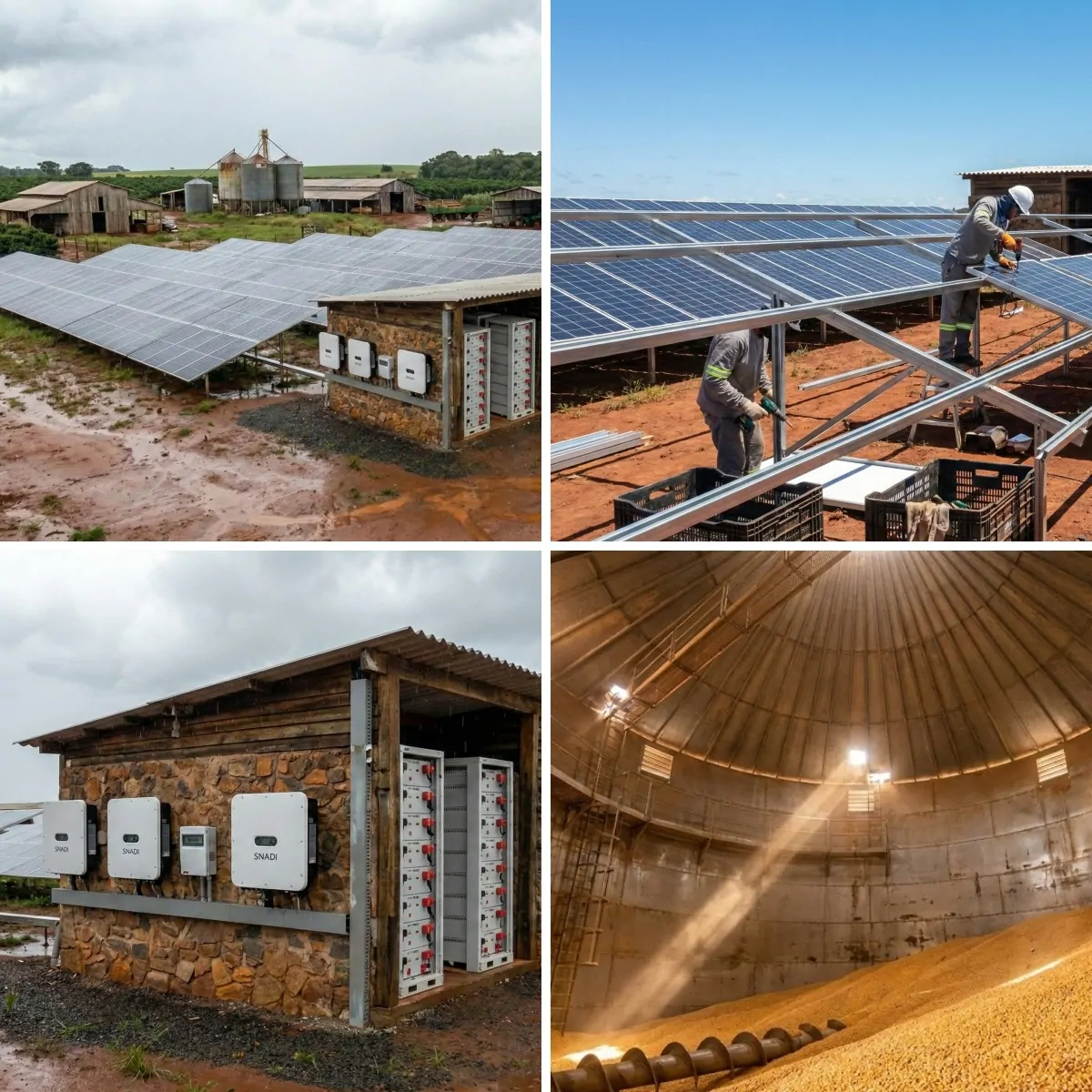
Fazenda Sol Nascente do Vale Verde is a prominent agricultural estate located in the remote interior of Brazil. Their primary grain handling facility serves as a critical hub during the harvest season. Historically, the facility operated entirely off grid, relying on two massive diesel generators to maintain 24/7 operations.
Prior to the SNADI installation, the remote grain handling facility relied on dual diesel generators, costing approximately $58,118 USD annually in fuel and servicing expenses.
- Crippling Fuel Costs: The farm was spending approximately ~$52,700 USD annually on diesel fuel and generator servicing.
- Logistical Fragility: Transporting fuel to such a remote location during peak harvest seasons presented significant logistical risks and added costs.
- Operational Noise and Emissions: The constant operation of generators conflicted with the farm's commitment to modern, sustainable agricultural practices.
To eliminate the farm's reliance on fossil fuels, SNADI implemented a modular, high capacity residential style battery system scaled for industrial demand:
- Modular Storage Backbone: The system utilized 40 stacked units of the HDB Series Stacked Solar Energy Storage System. By configuring these units in parallel, the facility achieved a massive 400kWh reservoir.
- Battery Modules: Each stack utilized 10.24kWh modules. These units feature LiFePO4 (Lithium Iron Phosphate) chemistry, providing the 10 years+ service life required for long term farm investment.
- Superior Efficiency: The integrated system boasts a 94% inverter efficiency and 98% MPPT efficiency, ensuring that every watt generated by the 150kW solar array is captured and utilized.
- Rugged Monitoring: The farm management can track energy levels and system health via the USB/RS232/GPRS/WIFI communication interfaces, even in remote desert conditions.
The system reduced diesel consumption by 92% and is projected to contribute $408,700 USD to the farm's bottom line over the next decade:
- 92% Diesel Reduction: Within the first six months of 2025, the farm effectively phased out daily diesel use. The generators are now only utilized for emergency backup during rare, extended storm fronts.
- Massive Financial ROI: With the batteries warrantied for 12 years and a payback period of only 3.8 years, the farm is entering nearly a decade of virtually free energy.
- Lifetime Wealth Generation: This transition is projected to contribute ~$370,600 USD to the farm's bottom line over the next 10 years by eliminating fuel and maintenance overhead.
- Sustainable Branding: Fazenda Sol Nascente now operates one of the most eco friendly grain processing facilities in the region, significantly increasing its competitive edge in the global market.
Talk To an Expert
Phone/WhatsApp:+86 18039293535
E-mail:exportdept@snadi.com.cn
Related News
-
 Microgrid battery storage in 2026 centers on resilience and decentralized power. Lithium iron phosphate stays the leading chemistry due to its safety profile and long lifespan, though solid state alternatives are emerging. Total system costs have declined through streamlined manufacturing and better supply chain logistics. Advanced energy management systems now utilize artificial intelligence to handle load balancing and peak shaving automatically. These modular installations enable neighborhoods to maintain power during utility failures while integrating renewable sources more efficiently than before.
 -
 In 2026, selecting a converter from dc to ac is vital for off-grid energy independence. High-quality inverters now reach efficiency ratings above 95 percent, utilizing advanced gallium nitride transistors and pulse width modulation for precise sine wave reconstruction. Pure sine wave converters are the industry standard for protecting sensitive electronics like medical tools and refrigerators. Modern systems often feature built-in mppt charge controllers and smart monitoring via bluetooth or mobile apps. Safety remains a priority with integrated fire suppression and surge protection for reliable power.
 -
 Solar panels remain effective during winter, often performing more efficiently in cold temperatures due to improved conductivity. However, shorter daylight hours and a lower sun angle reduce overall energy harvest compared to summer. For off grid systems, managing snow accumulation is critical, as even a thin layer can block sunlight. Increasing the tilt angle helps shed snow and captures low-angle winter rays. Additionally, winter requires focus on battery maintenance since cold can reduce storage capacity. Utilizing high-efficiency MPPT controllers can help maximize energy gains during these shorter, colder days for consistent off grid power.
 -
 Sizing solar equipment for your home involves a precise energy audit to ensure high efficiency and return on investment. The process begins by calculating daily watt-hour consumption for all appliances and estimating peak concurrent loads. Selecting high performance components like N Type TopCon panels and LiFePO4 batteries is essential for long term durability. Inverters must be sized with a safety factor to manage startup surges from heavy machinery. Battery capacity is then determined by the desired days of autonomy. Accurate sizing prevents resource waste and ensures system reliability.


