

The transition toward energy independence in the hospitality sector has moved beyond simple solar adoption: it is now about operational resilience. The energy storage system (ESS) is the heartbeat of the property. However, a common misconception among hotel owners is that capacity alone equates to reliability. True security is only confirmed through a rigorous battery stress test. This process is not merely a technical formality but a critical financial safeguard that ensures guest comfort remains uninterrupted even under extreme peak demands.
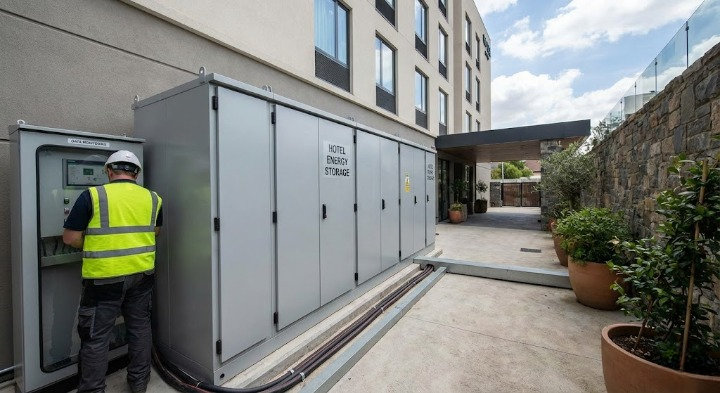
Why Battery Stress Test Secures ROI for Hotel Owners
In the world of hospitality, the return on investment (ROI) is tied directly to the uptime of guest services. When a resort owner invests in a 500kWh system, they are not just buying kilowatt-hours: they are buying the certainty that twenty villas can simultaneously activate air conditioning, water heaters, and kitchen equipment without a system collapse. A battery stress test serves as the foundation for this ROI by validating performance under real world pressures.
One primary objective of testing is measuring peak load resilience. By simulating the hotel peak hours, typically between 18:00 and 21:00, engineers can observe the voltage sag. If the voltage drops too sharply during a 1.5C or 2C discharge rate, it indicates internal resistance issues or poor cell consistency. Identifying these weaknesses early prevents the catastrophic failure of an entire battery string later.
Furthermore, a battery stress test is the most effective tool for extending asset life. By identifying weak cells during the initial commissioning or annual maintenance, owners can replace individual components before they cause a domino effect throughout the pack. Avoiding a full system replacement through proactive testing can save a remote resort tens of thousands of dollars in logistics and hardware costs over a five year period.
Translating Technical Battery Stress Test Results into Operational Security
Hotel owners often find technical specifications like C Rate or State of Health (SOH) abstract. To bridge the gap between engineering and operations, we must translate these metrics into tangible business outcomes.
| Technical Parameter | Stress Test Action | Operational Value for Owners |
| High C-Rate Discharge | Simulate full property load for 60 minutes | Ensures zero blackouts during peak guest activity hours |
| Thermal Stability | Monitor temperature via infrared during peak load | Lowers fire risk and reduces auxiliary cooling costs |
| Voltage Recovery | Measure bounce back speed after load removal | Predicts battery longevity and future maintenance budget |
| Cell Consistency | Check voltage deviation between cells at 10% SOC | Prevents sudden system shutdowns due to single cell failure |
Data from the 2024 Global Energy Storage Market Report indicates that systems subjected to annual stress testing experience 35% fewer unplanned outages compared to those that are only monitored remotely. For an off-grid resort, where a single night of power failure can result in $5,000 in refunds and irreversible reputation damage, the value of this data is undeniable.
Professional Execution of Battery Stress Test for Hospitality
Conducting a professional battery stress test requires a structured approach that mirrors the unique consumption patterns of the hospitality industry.
Step 1: Establishing the Baseline
Before applying load, engineers must use high precision internal resistance testers to record the initial state of every module. This creates a digital twin of the battery health. In the context of a Tier 1 ESS provider, this baseline acts as the original medical record for the power system.
Step 2: Extreme Load Simulation
This is the core of the battery stress test. The system is pushed to 110% of its rated design capacity for a controlled duration. The focus here is the Voltage Sag. In high quality LFP (Lithium Iron Phosphate) systems, the voltage should stabilize quickly. If the voltage continues to slide or drops by more than 5% within the first ten seconds, it indicates loose busbar connections or aging electrolytes. The immediate solution involves tightening physical connections or recalibrating the cell balancing through the BMS.
Step 3: Real Time Thermal Monitoring
Heat is the enemy of off grid longevity. During the test, thermal imaging is used to track the temperature of battery terminals. A healthy system should not see a temperature rise exceeding 15°C per hour under standard load. If hotspots are detected, it reveals that the cabinet ventilation flow is inadequate. Instead of simply turning up the air conditioning, which wastes energy, the stress test results allow for the optimization of the physical airflow path.
Analyzing Battery Stress Test Data for Strategic Financial Planning
The data gathered from a battery stress test provides a roadmap for the next five years of hotel operations. One of the most critical metrics is the voltage recovery curve. Once the load is removed, a healthy battery should see its voltage rebound almost immediately to its resting state. A sluggish recovery is a leading indicator of chemical degradation.
For forward-thinking owners, SNADI Solar use this data to create a Five Year Power Asset Evaluation. When the State of Health (SOH) of a specific battery bank drops below 80%, the stress test results help us decide to transition those units to non-critical loads, such as garden lighting or laundry water pre-heating, rather than disposing of them. This second life strategy maximizes the initial capital expenditure.
SNADI Solar's Energy Retrofit for the Mount Meru Hotel in Tanzania
In June 2024 – March 2025, Mount Meru Hotel, a premier 178 rooms hospitality property. The hotel faced chronic power instability and relied heavily on two 500kVA diesel generators. During peak tourism seasons, monthly fuel costs exceeded $18,000. Additionally, frequent voltage spikes from the local grid caused repeated failures in the hotel's central chiller system and laundry equipment. A comprehensive off grid hybrid system was implemented, focusing on maximizing solar self consumption. The installation included a 450kWp solar array integrated into carports and rooftop spaces, paired with a 1.2MWh LiFePO4 Energy Storage System. The system was configured with a "Silent Night" logic. Between 11:00 PM and 7:00 AM, the generators were programmed to remain off, with the entire hotel load supported by the ESS. During the day, the laundry and pool heating systems were automated to trigger only when solar production exceeded the hotel's baseline demand.
The Results:
Fuel Reduction: Monthly diesel consumption dropped by 72%, saving the property approximately $13,000 per month.
Asset Protection: Zero reported compressor failures in the chiller system since commissioning due to the clean sine wave output of the high-frequency inverters.
Customer Satisfaction: Guest complaints regarding generator noise and vibration during the night were completely eliminated.
ROI: The projected payback period for the entire system was revised from 5.5 years to 4.2 years due to rising local fuel taxes.
Conclusion
Being a Tier 1 provider means going beyond basic safety. While UN38.3 is the standard for transport, SNADI's stress testing protocols align with IEC 62619, which focuses on high intensity life cycle simulation. We verify the secondary protection layers of the BMS. This means ensuring that if a stress test reaches a critical threshold, the system is capable of a precision disconnect to prevent permanent chemical damage. This level of safety is what separates a professional ESS from a DIY solution. For hotel owners, the message is clear: do not wait for a blackout to test your limits. A professional battery stress test is the ultimate insurance policy for your energy independence.
✉️Email: exportdept@snadi.com.cn
Website:
☎️WhatsApp / WeChat: +86 1803929353
FAQ
Q1. What are the primary benefits of conducting a battery stress test for off grid hotels?
A stress test validates that the energy storage system can handle maximum guest demand without voltage collapse. This proactive approach ensures operational security, protects the owner's financial investment, and maintains high guest satisfaction by preventing power outages during peak hours such as evening air conditioning use.
Q2. How does the Mount Meru Hotel case study illustrate the value of solar energy storage?
The case study shows that a properly implemented solar and lithium battery system can reduce monthly diesel costs by 72 percent. By using a Silent Night logic, the hotel eliminated generator noise complaints and improved asset protection for sensitive equipment through stable power delivery, significantly shortening the payback period.
Q3. What happens during the extreme load simulation phase of a battery test?
During load simulation, the system is pushed to 110 percent of its rated capacity to monitor voltage sag. If the voltage stabilizes quickly, the system is healthy. If it drops sharply, it indicates issues like loose connections or aging electrolytes, allowing for recalibration or physical repairs before a real outage occurs.
Q4. How does thermal monitoring during testing prevent hotel power failures?
Heat is a major threat to battery longevity. By using thermal imaging during high load tests, engineers can identify hotspots caused by poor ventilation or terminal issues. Addressing these findings optimizes airflow and lowers fire risks, ensuring the system remains efficient and safe for long term hotel use.

FAQ
The energy consumption standards for household appliances are usually regulated by relevant national departments, and different products have different energy efficiency level standards. Consumers can choose energy-saving products based on their energy efficiency levels.
What are the precautions for repairing and maintaining household appliances?
What is the service life of household appliances?
What issues should be noted when purchasing household appliances?
What issues should be noted when purchasing household appliances?