

The global energy landscape in 2026 has transitioned from a period of transition to a new era of absolute energy autonomy. For high energy consumption factories, electricity is no longer just a utility bill but a core strategic asset that determines market competitiveness. In an era where grid instability and fluctuating peak prices threaten profit margins, the concept of an energy fortress has emerged. Central to this fortress is the decision between traditional low voltage setups and the modern high voltage battery management system. As of early 2026, market data indicates that industrial sectors are pivoting toward high voltage architectures at an unprecedented rate, with a 45 percent increase in adoption across Southeast Asian manufacturing hubs.
Modern industrial operations require more than just power: they require quality, consistency, and economic viability. Traditional off grid systems often struggle with the sheer scale of factory loads, leading to thermal stress and inefficient energy transfer. The high voltage battery management system solves these issues by shifting the architectural logic from high current to high voltage, effectively turning your energy storage system into a high performance production tool. This evolution allows factories to treat solar energy not as a supplementary resource, but as their primary second productivity.
The Economic Calculation: How High Voltage Systems Directly Boost Net Profit
The transition to a high voltage battery management system is driven by hard financial data rather than purely environmental goals. The primary technical advantage lies in the reduction of energy waste during transmission and conversion.
From 92% to 97%: Reclaiming the Production Line
The fundamental law governing energy loss in any electrical system is defined by the relationship between current and resistance. We can calculate power loss using the formula
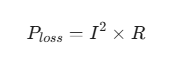
.In a traditional 48V low voltage system, the current I required to move a specific amount of power is extremely high. By increasing the system voltage to 400V or 800V, the current is drastically reduced. Because the loss is proportional to the square of the current, even a small reduction in amperage leads to a massive gain in efficiency.
For a factory running a 1MWh storage system, a move from 92 percent efficiency to 97 percent efficiency represents a reclaim of 50,000 kWh per year. At an average industrial rate, this directly translates into thousands of dollars in annual savings that would otherwise be lost as heat.
| System Attribute | 48V Low Voltage Setup | 400V+ High Voltage System |
| Typical Round Trip Efficiency | 88% to 92% | 95% to 98% |
| Heat Generation | High (Requires active cooling) | Low (Passive cooling often sufficient) |
| Cable Requirements | Thick copper (Expensive) | Thin cables (Cost effective) |
| Conversion Losses | Significant during DC/AC steps | Minimal due to voltage alignment |
| Annual Energy Savings | Baseline | +5% to +8% extra yield |
Building Block Expansion: Future Proofing Capital Investment
Industrial growth is rarely static. A factory that requires 1MWh of storage today may require 5MWh by 2028. A high voltage battery management system allows for modular, building block expansion that is far more efficient than parallel low voltage strings. SNADI architectures, such as the HDB stacked series and the SNT integrated systems, allow for this seamless scaling. This ensures that your initial engineering investment is preserved, as you do not need to redesign the entire power distribution network when adding capacity. You simply add more modules to the existing high voltage string, saving up to 40 percent on future engineering and labor costs.
Production Continuity: Defining Zero Downtime with High Voltage BMS
In a high output manufacturing environment, a single hour of downtime can cost a company tens of thousands of dollars in lost throughput and damaged equipment. The high voltage battery management system is designed to act as an intelligent shield for the production line.
Millisecond Alerts: Preemptive Self Healing
Modern SoC (State of Charge) and SoH (State of Health) algorithms have evolved into predictive maintenance tools. A top tier high voltage battery management system can monitor cell level performance with millisecond precision. This allows the system to identify an anomalous cell or a rising internal resistance trend up to 48 hours before a failure occurs. Instead of an emergency shutdown, the system can alert the facility manager during non production hours, allowing for scheduled maintenance. This self healing logic shifts the paradigm from reactive repairs to proactive asset management, effectively eliminating the risk of catastrophic power failure during a critical production run.
Reliability in Extreme Environments
Factories located in mining districts or coastal industrial zones face unique challenges such as dust, humidity, and extreme temperature fluctuations. SNADI manufacturing processes strictly adhere to international quality control standards to ensure high quality delivery even for these harsh environments. The high voltage battery management system is often housed in IP54 or IP65 rated enclosures that protect the delicate electronics from corrosive salt air or abrasive particulate matter. This environmental resilience is not just about protection: it is about extending the lifecycle value of the battery bank, ensuring a 10 to 15 year operational life even under stress.
Compliance and Risk Mitigation
As global supply chains become more integrated, the requirements for green energy compliance are becoming a mandatory barrier to entry.
ISO and IEC Standards: The Basis for Insurance Discounts
Using a high voltage battery management system that meets top tier safety standards is a critical component of corporate risk management. SNADI facilities are certified under ISO 9001 for quality, ISO 14001 for environmental management, and ISO 45001 for occupational health and safety. For factory owners, these certifications serve as more than just wall hangings: they are essential documents for securing lower property insurance premiums. Insurance companies in 2026 offer significant discounts to facilities that utilize certified, high voltage storage systems with integrated fire suppression and automated fault isolation. Furthermore, these systems provide the green电力 data required to satisfy the audit requirements of major international buyers.
Thai Precision Tech, Rayong, Thailand
In November 2024, Thai Precision Tech, a medium sized automotive component manufacturer in Rayong, Thailand, faced rising peak energy costs and frequent micro outages from the local grid. They implemented a SNADI SNT 125 241KWH high voltage storage system to serve as their primary energy fortress.
Project Date: November 2024
Location: Rayong Industrial Zone, Thailand
Solution: SNT 125 241KWH Integrated System with PV 250 input
Results: The factory reported a 28 percent reduction in monthly energy costs within the first quarter of operation. Most importantly, the high voltage battery management system successfully bypassed three local grid failures without a single millisecond of interruption to the robotic assembly lines.
The implementation was completed using the SNADI one stop intelligent manufacturing and lean production approach, which reduced the typical delivery and commissioning window by 30 percent.
Closed Loop Service: All in One Energy Management
SNADI/SNAT Solar factory owner focus on production, not battery maintenance. This is why a closed loop, all in one service model has become the industry standard for 2026.
The SNADI Lifecycle Management Plan
One Stop Commissioning: Professional installation teams ensure the high voltage battery management system is optimized for your specific load profile from day one.
Active Maintenance Strategy: Instead of waiting for a problem, the service plan includes a quarterly battery health report. This digital audit provides a deep dive into SoH trends and thermal performance.
End of Life Recycling: As part of a sustainable energy strategy, the service includes a clear path for battery recycling and module replacement, ensuring your energy fortress remains modern and compliant for decades.
The high voltage battery management system is no longer an optional upgrade for the forward thinking factory: it is the foundational technology of the modern industrial energy strategy. By prioritizing efficiency, scalability, and safety, factory owners can transform their energy consumption from a variable cost into a stable, high yield asset.
✉️Email: exportdept@snadi.com.cn
Website:

FAQ
High voltage systems reduce current flow, which minimizes energy loss during transmission. In 2026, this architecture allows factories to reclaim up to 5 percent more energy compared to low voltage setups, effectively turning storage into a high performance production tool.
2. How does a high voltage battery system improve factory profit margins?
3. Can high voltage energy storage systems prevent industrial downtime?
4. What are the benefits of modular battery expansion for off-grid factories?
5. How does a certified BMS impact industrial insurance and compliance?