

The transition toward energy independence has made residential energy storage a cornerstone of modern infrastructure. For those operating in the off grid sector, the most critical question remains: how long do home solar batteries last? In 2026, the industry standard for a high quality lithium based system is between 10 and 15 years, with premium Lithium Iron Phosphate (LiFePO4) models often pushing toward the 20 years mark. Unlike the lead acid era where five years was considered a success, modern chemistry and intelligent management systems have fundamentally redefined the lifespan and financial viability of home energy storage.
The Quick Answer
If you are looking for a baseline, the useful life of a solar battery is typically defined as the point when it can no longer hold at least 70% to 80% of its original nameplate capacity. In 2026, SNADI Solar offer warranties covering 10 to 12 years or a specific throughput of energy (measured in megawatt hours). For off grid applications where the battery is cycled daily, this translates to roughly 6,000 to 10,000 charge discharge cycles before significant degradation occurs.
Battery Chemistry
The chemical composition of your battery cells is the single most important factor determining how long do home solar batteries last. While the market was once split between various lithium and lead acid technologies, 2026 has seen a definitive shift toward specialized stationary storage chemistries.
Why LiFePO4 is the Standard for 2026
Lithium Iron Phosphate (LiFePO4) has emerged as the dominant choice for residential ESS (Energy Storage Systems) because of its exceptional thermal stability and long cycle life. Modern LiFePO4 units are designed to withstand 6,000 cycles at a 25°C ambient temperature. This means that even with a full daily cycle, the battery can theoretically last over 16 years before reaching its end of life threshold. Furthermore, LiFePO4 does not suffer from the thermal runaway risks associated with Nickel Manganese Cobalt (NMC) chemistries, making it safer for indoor installations.
The Decline of Lead Acid in the Modern Era
While lead acid batteries (AGM and Gel) still exist, they are no longer recommended for primary home energy storage in 2026 unless the budget is extremely constrained. Their lifespan is typically limited to 3 to 5 years, or roughly 500 to 1,000 cycles. They are also highly sensitive to deep discharges; discharging a lead acid battery below 50% significantly accelerates internal sulfation and reduces its total life.
Comparison of Battery Chemistries (2026 Data)
| Feature | LiFePO4 (LFP) | Lithium NMC | Lead-Acid (Gel/AGM) |
| Typical Lifespan | 10 - 20 Years | 7 - 10 Years | 3 - 5 Years |
| Cycle Life (80% DoD) | 6,000 - 10,000+ | 1,000 - 2,000 | 300 - 800 |
| Safety Profile | Very High (Stable) | Moderate (Thermal Risk) | Moderate (Venting Req.) |
| Maintenance | Minimal (BMS) | Minimal (BMS) | Frequent Watering/Checking |
| Cost per kWh | $1,100 - $1,500 | $1,000 - $1,300 | $200 - $400 |
5 Factors That Drain Your Investment
Even the best battery can fail prematurely if subjected to poor environmental or operational conditions. Understanding these factors is crucial for anyone asking how long do home solar batteries last in a real world setting.
Depth of Discharge (DoD)
Depth of Discharge refers to how much of the battery capacity you use before recharging. Lithium batteries are remarkably resilient, with many 2026 models supporting an 80% to 90% DoD without sacrificing longevity. Conversely, lead acid batteries should never be discharged more than 50%. Consistently pushing a battery to a 100% empty state stresses the chemical structure and can shave years off the total lifespan.
Ambient Temperature
Batteries are like humans: they perform best in a temperate environment, ideally between 15°C and 25°C. High heat accelerates chemical reactions that lead to capacity loss. For every 10°C increase above 25°C, the life of a lead acid battery is effectively cut in half. Lithium iron phosphate is more robust, maintaining performance up to 45-55°C, though prolonged exposure to extreme heat will still degrade the cells faster than a climate controlled installation.
Charge and Discharge Rates (C-Rate)
The speed at which you move energy in and out of the battery matters. High power appliances like air conditioners or well pumps can draw massive current. If the battery bank is undersized, these high discharge rates generate internal heat. Modern off grid inverters often include settings to limit the maximum charging current (e.g., 0-30A MAX) to protect the battery plates.
The Role of Intelligent BMS
The Battery Management System (BMS) is the brain of the battery. It prevents over charging, over discharging, and balances individual cell voltages. In 2026, premium systems utilize integrated BMS/PCS/EMS architectures that provide automatic current sharing for parallel machines and comprehensive fault protection. A high quality BMS can extend a battery life by 3 to 5 years by ensuring the cells never operate outside their safety parameters.
Cycle Frequency
How often you use the battery dictates its chronological life. In a backup only scenario where the battery only runs during rare outages, a lithium battery could easily last 20 years. However, in an off grid scenario where the battery is cycled every single night, the cycle count becomes the limiting factor.
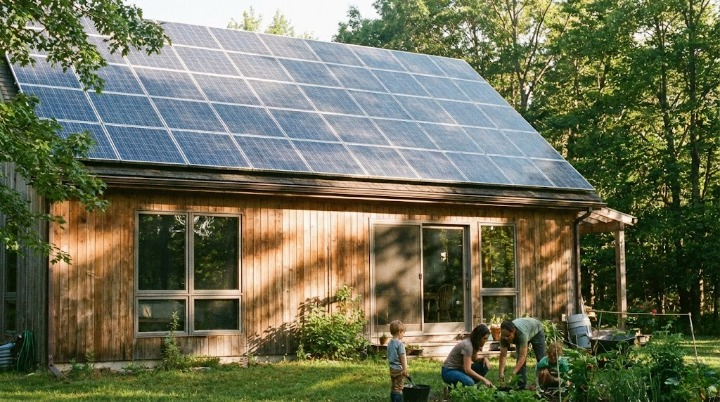
100% Off Grid Self Sufficiency (October 2025)
To understand the practical side of longevity, let us look at a real world installation documented by energy consultant Bob Wu in October 2025.
Project Overview: A rural home designed for 100% energy self sufficiency, completely disconnected from the utility grid.
Energy Audit: The homeowners cataloged every device, including a refrigerator (1.2 kWh/day), a well pump (1.0 kWh/day), and LED lighting. The total daily consumption was calculated at 4.6 kWh.
System Objectives: The primary goal was 100% reliability with a secondary objective of three days of autonomy to survive extended cloudy periods without a generator.
Component Selection: Based on the need for high cycle life, SNADI's team chose a LiFePO4 based system. By sizing the battery bank to handle three days of usage (approx. 15 kWh usable capacity), they ensured that the daily Depth of Discharge remained below 35% on average days.
Longevity Projection: Because the average daily DoD is so low, this specific system is projected to exceed 10,000 cycles, potentially serving the home for over 20 years before the battery reaches its 70% capacity threshold.
How to Extend Battery Life by 3+ Years
Optimal SOC Window: Whenever possible, keep the State of Charge (SOC) between 20% and 80%. Just like electric vehicles, lithium batteries are happiest when they are not sitting at 0% or 100% for long periods.
Installation Environment: Install your ESS in a dry, shaded, and ideally insulated area. If you live in a region with extreme winters, look for batteries with built in heaters or cold-weather charging protocols.
Firmware Updates: Modern intelligent inverters and batteries receive periodic firmware updates that optimize charging algorithms. Ensure your system is connected to a monitoring portal (e.g., via WiFi or RS485) to receive these enhancements.
Avoid Overloading: Use your inverter management software to stagger the start up of high wattage appliances. This prevents surge stress on the battery cells.
Future Outlook (2027 and Beyond)
As we look toward the end of the decade, two technologies are poised to change the longevity conversation. Sodiumion batteries are expected to become widely available for residential use in 2026-2027, offering better cold, weather performance at a projected cost of $400-$600 per kWh. Furthermore, solid state batteries are entering the research and development phase, promising to double energy density and potentially eliminate the risk of degradation entirely for up to 30 years.
Conclusion
The answer to how long do home solar batteries last depends heavily on your choice of chemistry and your commitment to proper system sizing. For the year 2026, the data is clear:
For Off Grid Living: Invest in LiFePO4 (LFP) technology. The 6,000+ cycle life is nonnegotiable for daily cycling.
For Reliability: Choose a system with a high-quality, integrated BMS and an IP54 rated enclosure if the installation environment is harsh.
For Financial Success: Focus on LCOS rather than the sticker price. A longer lasting battery is almost always the more economical choice over a 15 years period.
By selecting the right technology today, you are not just buying a battery, you are securing your energy future for the next two decades.
✉️Email: exportdept@snadi.com.cn
Website:
☎️WhatsApp / WeChat: +86 18039293535
FAQ
Q1: How many years does a home solar battery typically last?
Most lithium solar batteries last between 10 and 15 years with LiFePO4 models often extending up to 20 years under proper maintenance.
Q2: What primary factors determine solar battery life?
Battery chemistry depth of discharge and operating temperature are the most critical factors that determine how long home energy storage systems last.
Q3: Is LiFePO4 superior to lead acid for longevity?
Yes LiFePO4 technology provides a much higher cycle count and a significantly longer service life than traditional lead acid battery options.
Q4: How can I increase the lifespan of my solar battery?
You can maximize battery life by maintaining the charge level between 20 and 80 percent and keeping the unit in a climate controlled environment.

FAQ
The energy consumption standards for household appliances are usually regulated by relevant national departments, and different products have different energy efficiency level standards. Consumers can choose energy-saving products based on their energy efficiency levels.
What are the precautions for repairing and maintaining household appliances?
What is the service life of household appliances?
What issues should be noted when purchasing household appliances?
What issues should be noted when purchasing household appliances?