

As global energy markets face unprecedented volatility and infrastructure aging accelerates, the traditional reliance on centralized power has become a liability. For modern homeowners, understanding the strategic benefits of energy storage systems is no longer a matter of environmental altruism but a fundamental requirement for financial stability and family security. This shift represents a transition from being a passive consumer to an active owner of a critical asset.
Locking in energy costs for the next fifteen years
The most immediate of the many benefits of energy storage systems is the transformation of electricity from an unpredictable monthly expense into a fixed, predictable asset. In 2026, inflation in the utility sector has outpaced general consumer price indices, leaving those without storage vulnerable to constant rate hikes.
A barrier against energy inflation
By installing a high capacity lithium iron phosphate battery system, homeowners effectively lock in their Levelized Cost of Energy (LCOE) for the next decade or more. While the grid may experience price surges due to fuel shortages or carbon taxes, a solar plus storage setup operates on a fixed capital expenditure model. The math is compelling: when you amortize the cost of a system like the BL series, which offers over 6000 cycles at 25°C, the cost per kilowatt-hour drops significantly below forecasted utility rates for the late 2020s.
The financial truth of self consumption
A standard solar array without storage typically allows a home to utilize only 30 percent of the energy produced, with the rest being sent back to the grid for minimal credit. Utilizing the benefits of energy storage systems allows this rate to climb to 90 percent or higher. By storing midday solar production for use during evening peak hours, a household can create a consistent internal cash flow. For a typical suburban home, this optimization can translate into thousands of dollars in annual savings by avoiding the highest tier of utility pricing.
Eliminating the invisible bill
Many utilities in 2026 have implemented aggressive time of use (TOU) pricing. These invisible bills hit hardest during the summer evenings when cooling demand is high. A robust ESS allows for seamless load shifting, where the house runs entirely on stored energy during expensive hours, effectively neutering the utility's ability to charge premium rates.
Ensuring life continuity in an uncertain world
Beyond the financial metrics, the benefits of energy storage systems provide a layer of psychological and physical security that is increasingly rare. In a world characterized by extreme weather events and infrastructure strain, a home that can function as an independent island of civilization is invaluable.
The ultimate test of off grid capability
True energy sovereignty is defined by how a system performs when the grid is entirely absent. High performance inverters, such as the NKH series, are designed to operate independently, providing a pure sine wave output that mimics the stability of a healthy grid. This capability ensures that even during extended outages caused by storms or maintenance failures, a home maintains its lighting, refrigeration, and communication systems. This is particularly critical for households with medical equipment or those who operate high stakes remote offices.
Millisecond peace of mind
The technical difference between a standard backup and a professional ESS lies in the switching speed. Professional grade systems, such as the HDB stacked storage solutions, offer a transfer time of approximately 10ms. This speed is fast enough to prevent sensitive electronics, such as servers or high end workstations, from rebooting or losing data during a transition. This level of protection ensures that your digital life remains uninterrupted, regardless of the state of the external power lines.
| Feature | Standard Utility Grid | Lead Acid Battery Backup | Modern LFP Energy Storage |
| Reliability (Storms) | Low: Vulnerable to lines | Medium: Limited capacity | High: Independent operation |
| Cycle Life | N/A | 300 to 500 cycles | 6000+ cycles |
| Switching Speed | N/A | >50ms (Manual/Slow) | 10ms (Seamless) |
| Financial Model | Variable Expense | Depreciation Loss | Fixed Asset / ROI |
| Maintenance | None (Utility side) | High: Fluid checks | Low: Solid state |
Asset appreciation and the 2026 green premium
The real estate market of 2026 has reached a tipping point where energy infrastructure is a primary driver of property valuation. Much like high speed internet became a baseline requirement in previous decades, a sophisticated ESS is now a hallmark of a premium, future proofed home.
Energy ratings and market liquidity
Data from residential markets indicates that homes equipped with advanced ESS solutions command a significant green premium. Buyers are willing to pay more for properties that offer guaranteed lower operating costs and built in resilience. Furthermore, these homes tend to spend less time on the market. A system featuring modular expansion, like the AL series, allows a property to adapt to the changing needs of new owners, further enhancing its long term liquidity.
Infrastructure for the future
An energy storage system acts as the electrical foundation for all other smart home technologies. Whether it is supporting a fleet of electric vehicles or powering an automated climate control system, the ESS ensures that the home's internal grid can handle the high amperage loads of the future without requiring expensive service upgrades from the utility.
Total freedom for electric vehicle owners
For the modern EV driver, the benefits of energy storage systems extend to the garage. The synergy between a home battery and an electric vehicle represents the final step in decoupling personal mobility from the fluctuating costs of the energy market.
The home fuel station
By treating the ESS as a personal fuel depot, homeowners can capture surplus solar energy during the day and transfer it to their vehicle at night. This eliminates the need for expensive public charging and ensures that the vehicle is always powered by the cleanest, cheapest energy available. In 2026, this integration can reduce total household energy and transportation costs to near zero levels.
Bidirectional synergy and V2H
Advanced systems are now exploring the potential of Vehicle to Home (V2H) technology. In this scenario, the EV acts as a secondary reserve for the home ESS during extreme off grid events. This bidirectional flow creates a massive energy buffer, allowing a household to survive for weeks without grid intervention if necessary.
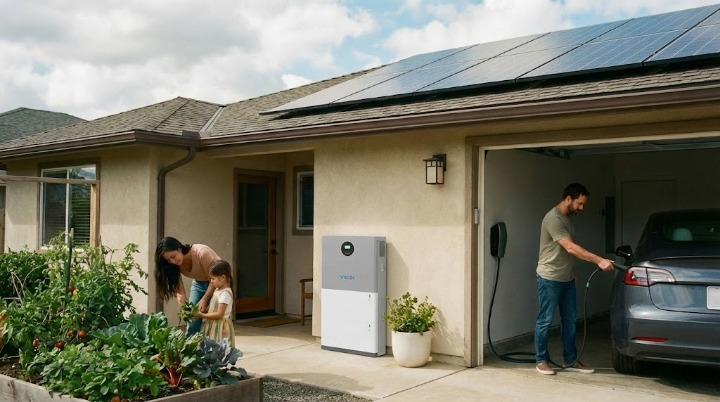
The High Desert Homestead Project
In late 2023, a project was completed for a 4000 square foot homestead in the high desert of Idaho, USA. The owner, Marcus Thorne, required a system that could handle sub zero winter temperatures and high summer heat without grid access.
The installation utilized a 45kWh LFP array consisting of three parallel units. During a week long winter storm in January 2024, the homestead maintained full power for essential heating and refrigeration despite limited solar gain. The systems LFP chemistry provided the necessary thermal stability to operate safely in an unheated outbuilding. This real world application demonstrates that a properly sized ESS can replace traditional fossil fuel generators entirely.
Minimalist maintenance and silent operation
Unlike mechanical generators that require fuel storage, oil changes, and regular testing, a modern ESS is a silent, solid state guardian.
Lifecycle services and modularity
The SNADI/SNAT Solar systems in 2026 are designed with a focus on ease of installation and maintenance. For instance, the use of square aluminum shell cells in high end batteries provides a more stable and durable structure than older cylindrical designs. The non toxic and non polluting nature of these materials ensures that they can be safely installed within or near living spaces.
Predictive safety and monitoring
The SNADI/SNAT Solar systems come equipped with integrated Battery Management Systems (BMS) that provide multiple layers of safety, including protection against over discharge, high temperatures, and short circuits. With optional WiFi remote monitoring, homeowners can track their energy production and consumption in real time, receiving alerts before a potential issue becomes a failure. This transition from active management to silent, digital oversight is a key reason for the widespread adoption of these systems.
Conclusion
The benefits of energy storage systems in 2026 represent more than just a technological upgrade: they are the blueprint for a new way of living. By providing financial certainty, physical security, and asset appreciation, these systems empower families to take control of their most basic needs. In an era where energy is both more expensive and more vital than ever before, investing in a robust storage solution is the most rational decision a homeowner can make.
✉️Email: exportdept@snadi.com.cn
Website:
☎️WhatsApp / WeChat: +86 1803929353
FAQ
Q1: How do energy storage systems protect against rising utility rates?
By storing solar energy for use during peak evening hours, homeowners can avoid expensive time of use pricing and lock in their energy costs for a decade or more, regardless of grid inflation.
Q2: Can an energy storage system keep a home running during a week long storm?
Yes, high capacity lithium iron phosphate systems can provide independent power for refrigeration, heating, and communication even during extended outages, effectively replacing traditional fossil fuel generators.
Q3: Does installing an energy storage system increase a home's market value?
Properties equipped with advanced storage solutions command a green premium in the real estate market, attracting buyers who prioritize lower operating costs and built-in energy resilience.
Q4: What is the significance of the 10ms transfer speed in modern ESS?
This rapid switching speed is essential for protecting sensitive digital equipment, such as home office servers or medical devices, from rebooting or data loss during a transition from grid to battery power.

FAQ
The energy consumption standards for household appliances are usually regulated by relevant national departments, and different products have different energy efficiency level standards. Consumers can choose energy-saving products based on their energy efficiency levels.
What are the precautions for repairing and maintaining household appliances?
What is the service life of household appliances?
What issues should be noted when purchasing household appliances?
What issues should be noted when purchasing household appliances?