

As the global energy landscape undergoes a tectonic shift toward decentralization, the precision of electrical measurements has transitioned from a technical necessity to a strategic economic asset. With the surge in renewable energy integration, expected to drive a 1.8% increase in global electricity demand through 2026, understanding and calculating true power is now the cornerstone of both grid compliance and system profitability.
The Fundamental Trio: Understanding True, Reactive, and Apparent Power
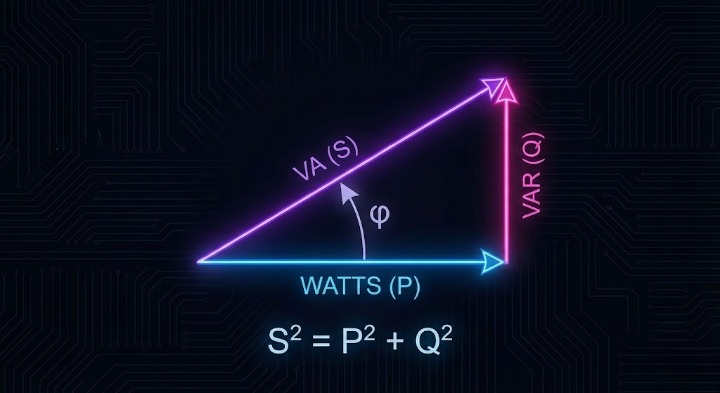
To master the calculation of true power, one must first navigate the "Power Triangle." In alternating current (AC) systems, power is not a singular value but a composite of three distinct components:
True Power (P): Measured in Watts (W), this is the actual energy consumed by a load to perform work, such as rotating a motor or illuminating a facility. It is the "useful" power.
Reactive Power (Q): Measured in Volt-Amperes Reactive (VAR), this power oscillates between the source and the load (stored in magnetic or electric fields) without performing work. It is essential for maintaining voltage levels in inductive loads like transformers.
Apparent Power (S): Measured in Volt-Amperes (VA), this is the geometric sum of true and reactive power, representing the total power flowing through the circuit.
The Mathematical Core: Calculating True Power
In a standard AC circuit, calculating true power requires more than just multiplying voltage by current. The relationship is governed by the Power Factor (PF), which represents the efficiency of the power usage.
The standard formula for single-phase True Power is: P = V × I × cos(φ)
Where:
V is the Root Mean Square (RMS) voltage.
I is the RMS current.
cos(φ) is the displacement power factor (the phase angle between voltage and current).
For three-phase systems, which are the standard for industrial solar inverters and wind turbines, the calculation becomes: P = √3 × V_line × I_line × PF
Why Precision in Calculation is Non-Negotiable in 2026
The TP Low Frequency Three-phase Inverter (IGBT) is designed for industrial-scale accuracy. It utilizes advanced Digital Signal Processing (DSP) and dual MCUs to ensure precise power modulation and complete isolation of the output power supply. By maintaining an efficiency of >90%, this inverter allows operators to maximize their Energy yield while meeting strict grid compatibility requirements.
Recent shifts in energy policy, particularly the 2025 mandates regarding market-based procurement of ancillary services in the EU and North America, have given true power calculation a direct monetary value. Operators who can accurately report and manage their power output can now participate in lucrative grid-stabilization markets.
| Power Metric | Unit | Impact of Inaccurate Calculation | Economic Consequence (2026 Projection) |
| True Power (P) | Watts (W) | Under-reporting energy yield | Lost revenue from PPA agreements |
| Reactive Power (Q) | VAR | Grid instability/Voltage sags | Penalties from Grid Operators |
| Power Factor (PF) | Ratio | Excessive line losses | Higher operational expenditure (OPEX) |
Data Source: Based on 2025 Power and Utilities Industry Outlook - Deloitte Insights.
The Impact of Harmonics on Modern Calculations
One of the most significant challenges in 2026 is Total Harmonic Distortion (THD). Modern power electronics, such as high-frequency inverters and LED lighting, introduce harmonics that distort the sinusoidal waveform. In these environments, the traditional cos(φ) formula may fall short. Engineers must now account for the Distortion Power Factor:
True PF = Displacement PF × Distortion PF
Calculating true power in a distorted environment requires advanced Power Quality Analyzers that utilize Fast Fourier Transform (FFT) algorithms to integrate power across the entire frequency spectrum.
Step-by-Step: Implementing Real-Time Calculation in DERMS
For operators of Distributed Energy Resources (DERs), manual calculation is obsolete. The integration of IoT and AI-driven platforms allows for real-time monitoring.
Sensor Deployment: Utilize high-precision CT (Current Transformers) and PT (Potential Transformers) with accuracy classes of 0.2s or better.
Digital Signal Processing: Implementation of high-speed sampling to capture transients and harmonics.
Edge Computing: Using local controllers to calculate true power at the point of common coupling (PCC) to minimize latency in grid response.
The Economic Upside: From Calculation to Compensation
As of late 2025, regulatory bodies like the German Federal Network Agency (Bundesnetzagentur) have moved toward incentivizing reactive power management. By precisely calculating and controlling the ratio of true to reactive power, plant operators can transform their facilities from simple energy generators into active grid-support assets. This shift is expected to increase the Internal Rate of Return (IRR) for large-scale storage and PV projects by 3-5% annually.
Conclusion
Calculating true power is no longer a static exercise found in electrical engineering textbooks. It is a dynamic, high-stakes process that sits at the intersection of physics and finance. In the 2026 energy market, where grid stability is the most valuable commodity, the ability to quantify and optimize every watt of true power is the ultimate competitive advantage. For system integrators and asset managers, investing in high-precision calculation tools is not just a technical choice—it is a fiscal imperative.
✉️Email: exportdept@snadi.com.cn
Website:
www.snadisolar.com
☎️WhatsApp / WeChat: +86 18039293535
FAQ
Q1: How do you calculate true power in a single phase AC circuit?
A: In a single phase AC circuit, true power is calculated by multiplying the RMS voltage, the RMS current, and the power factor. The standard formula is P = V × I × cos(φ), where the result is measured in Watts (W). This measurement represents the actual energy consumed by a load to perform useful work.
Q2: What is the difference between true power and apparent power in solar systems?
A: True power is the actual power used to perform work, such as running a motor, and is measured in Watts. Apparent power is the geometric sum of true power and reactive power, representing the total power flowing through the system, measured in Volt Amperes (VA). Understanding both is crucial for optimizing solar inverter efficiency.
Q3: Why is accurate true power calculation essential for grid stability in 2026?
A: With the surge in renewable energy, precise power measurement has transitioned into a strategic economic asset. Accurate calculations ensure grid compliance, help avoid penalties from voltage sags or instability, and allow operators to participate in lucrative grid stabilization markets, ultimately increasing the return on investment for solar projects.
Q4: What is the formula for calculating true power in a three phase system?
A: For industrial scale applications like three phase solar inverters, the true power formula is P = √3 × V_line × I_line × PF. This calculation accounts for the line voltage, line current, and the power factor (PF), ensuring that operators can maximize energy yield and meet strict grid compatibility requirements.
Q5: How does harmonic distortion affect true power calculation in modern inverters?
A: Modern power electronics can introduce harmonics that distort the standard sinusoidal waveform. In these environments, the traditional power factor formula may be incomplete. Engineers must account for the distortion power factor by using the formula: True PF = Displacement PF × Distortion PF, often requiring advanced power quality analyzers to ensure precision.

FAQ
The energy consumption standards for household appliances are usually regulated by relevant national departments, and different products have different energy efficiency level standards. Consumers can choose energy-saving products based on their energy efficiency levels.
What are the precautions for repairing and maintaining household appliances?
What is the service life of household appliances?
What issues should be noted when purchasing household appliances?
What issues should be noted when purchasing household appliances?