

For modern agricultural operations, electricity is no longer just a utility; it is a critical production factor. Whether it is maintaining the temperature in a poultry house or ensuring a drip irrigation system runs during a heatwave, the reliability of energy directly correlates with the farm's bottom line. In the off grid sector, the battery bank is often the most significant capital expenditure, representing up to 60% of the total system cost. However, the battery is only as effective as the technology governing it. This is where the solar battery management system becomes the strategic brain of your energy asset, transforming it from a depreciating expense into a high performance profit center.
How BMS Defines Off Grid Security
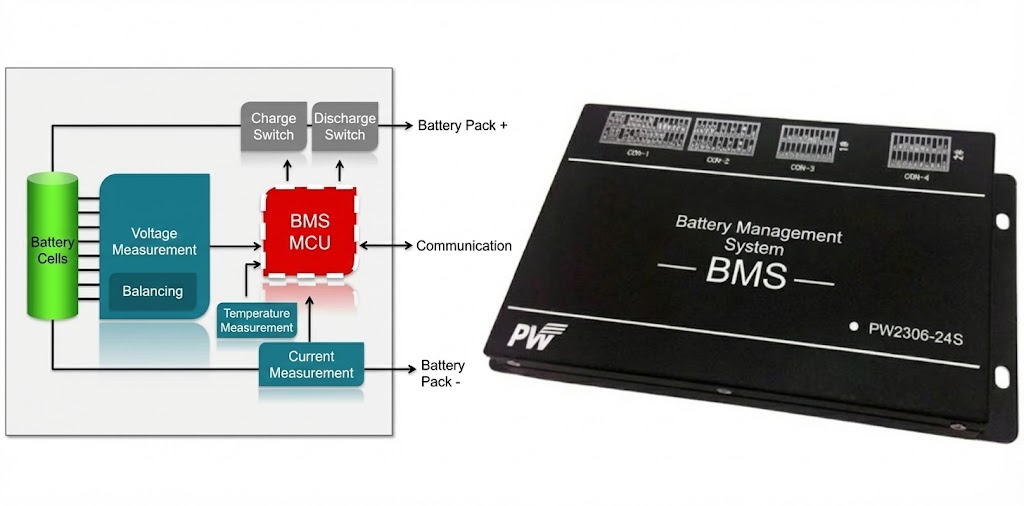
In an off grid environment, a solar battery management system is not merely an accessory; it is the safeguard of your farm's energy security. The traditional view of batteries as simple storage units is outdated. In reality, a battery bank is a collection of individual chemical cells that must be synchronized perfectly. Without a sophisticated solar battery management system, a single weak cell can lead to the premature failure of an entire 100kWh bank, resulting in catastrophic downtime.
By implementing advanced management strategies, we can shift the narrative from buying batteries to investing in energy assets. A high quality BMS doesn't just protect the cells; it optimizes the Levelized Cost of Energy (LCOE). While a standard lithium setup might promise 3000 cycles, a system utilizing precise voltage windowing and active balancing can reach 6000 cycles or more. This effectively reduces the cost per kilowatt-hour by over 40% throughout the system's life, ensuring that your investment pays for itself much faster than anticipated.
Why Off-Grid Farms Require Industrial Grade Management
Off grid farms are among the most demanding environments for power electronics. Unlike a controlled residential garage, a farm exposure includes high humidity, dust, and extreme temperature fluctuations. A standard solar battery management system designed for domestic use will often fail under these conditions.
Thermal Runaway Protection in Extreme Climates
Heat is the primary enemy of LiFePO4 chemistry. When ambient temperatures in regions like Sub Saharan Africa or Central Australia exceed 45°C, battery internal resistance rises. An industrial solar battery management system employs advanced thermal compensation algorithms. Instead of a hard shutdown, which would stop vital nursery ventilation, the BMS enters a derating mode. It intelligently limits charge and discharge rates to lower internal temperatures while keeping the fans running. This nuanced approach ensures that production materials, such as seedlings or livestock, remain protected even during peak summer heat.
Extending Cycle Life Through DOD Strategy
The secret to making a battery bank work for ten years instead of five lies in the Voltage strategy. While marketing teams often tout 100% Depth of Discharge (DoD), experienced engineers know that a 10%-90% DoD range significantly inhibits the growth of lithium dendrites within the cells. A professional solar battery management system allows farm owners to set these conservative parameters, ensuring the lithium iron phosphate remains stable. By avoiding the extreme ends of the charge cycle, the BMS preserves the chemical integrity of the cathode, adding years to the hardware's operational life.
Comparison: Standard vs. Advanced BMS Features for Agriculture
| Feature | Standard Components (Component Sale) | Professional Solution (System Integration) |
| Balancing Method | Passive (50mA dissipation) | Active (2A - 5A transfer) |
| System Availability | < 95% (Frequent nuisance trips) | > 99.9% (Deeply adapted firmware) |
| Maintenance Cost | High (Requires onsite engineers) | Low (Remote diagnostics & DIY ready) |
| Asset Lifespan | 3-5 Years | 8-10+ Years |
| Communication | Basic LED or No Comms | Full Integration (CAN/RS485/Bluetooth) |
Active vs Passive Balancing
For farms using large capacity cells (such as 200Ah or 314Ah units), the method of cell balancing is crucial. Most entry level solar battery management system units use passive balancing, which simply burns off excess energy from higher voltage cells as heat. This is not only wasteful in an off grid scenario where every watt counts, but it is also too slow for large banks. Advanced solar battery management system solutions utilize active balancing. This technology takes the excess energy from a high voltage cell and transfers it to a lower voltage cell. In a typical 200Ah bank, active balancing can recover up to 15% of the capacity that would otherwise be lost due to the bucket effect"(where the whole bank stops because one cell is full). For a farm owner, this means getting the full value of the lithium they paid for, rather than being limited by the weakest link in the chain.
Precise SOC and SOH Estimation
One of the most common complaints from off grid users is false capacity readings. A farm owner might see 20% State of Charge (SOC) on their screen, only for the system to shut down when a high power water pump starts. This occurs because cheap systems rely solely on voltage to estimate capacity. A SNADI Solar's premium solar battery management system integrates a high precision Coulomb counter with Open Circuit Voltage (OCV) fusion algorithms. This provides a real time, high fidelity look at the battery's health. When a heavy inductive load, like a 5HP motor starts, the BMS recognizes the transient voltage dip and does not mistake it for a low battery. This prevents unnecessary irrigation interruptions and gives the owner a safe redundancy they can trust.
Seamless Integration
For a solar battery management system to be effective, it must speak the same language as your inverters. In the off grid world, brands like Victron, Voltronic, and Growatt are the industry standards. A professional BMS comes pre configured with these communication libraries. In the past, installers might spend 4 to 6 hours manually configuring charging parameters. With a modern, protocol integrated solar battery management system, this is reduced to a 15 minutes plugand play process. This is particularly vital for remote farms where specialized labor costs are high. The closed loop communication ensures the inverter knows exactly what the battery can handle, preventing over current events during the startup of heavy machinery.
Agricultural loads are notoriously difficult. Electric motors for pumps and grinders can pull 5 to 7 times their rated current during startup. A standard solar battery management system might interpret this as a short circuit and disconnect the power. The SNADI's solution lies in multi stage over current protection. A sophisticated solar battery management system is programmed with a soft start Coordination delay. This allows the system to tolerate a 300% current surge for 2 to 3 seconds, long enough for a motor to reach operating speed, without triggering a full system shutdown. This level of intelligence ensures that your irrigation schedule remains on track regardless of the load's initial kick.
The greatest risk to an off grid farm is a sudden, unforeseen failure. Through built in GPRS or Bluetooth modules, a solar battery management system can provide 24 hours look ahead warnings. If the BMS detects a cell beginning to show an abnormal resistance trend, it sends an alert to the owner's smartphone. Instead of waiting for the power to go out during harvest, the owner can schedule a simple maintenance check. This transition from emergency repair to preventive maintenance is what separates professional agricultural enterprises from amateur setups. It ensures that the solar battery management system is not just a protector, but a partner in your farm's long term operational success.
High-Performance Off-Grid Dairy Operations (September 2023)
In September 2023, the Mogale Dairy Expansion Project in Limpopo, South Africa, faced a critical challenge. The farm needed to maintain a continuous milk cooling chain using a 150kWh LiFePO4 bank, but the extreme heat and massive compressor startup currents were causing the existing generic BMS to trip three times a day. The solution by SNADI Solar involved replacing the legacy controllers with an integrated solar battery management system featuring 2A active balancing and GPRS remote monitoring.
The Results:
System Uptime: Increased from 92% to 100% within the first 30 days.
Temperature Management: The BMS successfully derated charging during the 1:00 PM peak (averaging 48°C), preventing thermal shutdowns.
ROI Impact: By eliminating milk spoilage events caused by power failure, the farm estimated a $12,000 saving in the first quarter alone.
This real world example demonstrates that the solar battery management system is the difference between a system that works in theory and one that survives the reality of the field.
✉️Email: exportdept@snadi.com.cn
Website:
☎️WhatsApp / WeChat: +86 18039293535
FAQ
Q1. How much longer will my battery bank last with an advanced BMS compared to a standard system?
An advanced BMS can extend the operational lifespan of your battery bank by 25% to 40% by preventing the primary causes of premature degradation. It acts as a precision controller that avoids overcharging, deep discharging, and harmful temperature fluctuations. For commercial facilities like hotels or farms, this extension means you can delay the significant expense of battery replacement by several years, directly increasing the cumulative savings and the overall ROI of your solar energy project.
Q2. Do I need specialized technical expertise to monitor the BMS in my commercial facility?
No, modern advanced BMS solutions are designed for automated management and ease of use for non technical owners. Most systems are integrated with cloud based monitoring platforms that provide a user friendly interface for school or resort managers. You can track the health and performance of your energy storage through a mobile app or web dashboard, and the system will automatically send alerts if it detects any anomalies, allowing for proactive maintenance without needing a full-time engineer on site.
Q3. How does the BMS specifically protect my building from fire risks like thermal runaway?
Safety is the most critical function of a BMS, especially for high occupancy environments like schools and hotels. The system continuously monitors the temperature and voltage of every individual cell within the battery pack. If it detects a rapid temperature increase or an internal short circuit that could lead to thermal runaway, the BMS will instantly isolate the affected battery module and trigger a safety shutdown. This active protection layer ensures that your energy storage system remains a safe asset rather than a liability.
Q4. Can I integrate an advanced BMS into my existing older solar battery installation?
While the most efficient results come from integrated systems where the BMS and battery cells are factory matched, it is often possible to upgrade your existing energy storage with external management and monitoring hardware. By adding advanced sensors and communication modules, you can gain better visibility into the health of your current battery bank. This allows you to optimize the charging cycles of your older batteries, helping you extract the maximum remaining value from your original investment before a full system upgrade is required.

FAQ
The energy consumption standards for household appliances are usually regulated by relevant national departments, and different products have different energy efficiency level standards. Consumers can choose energy-saving products based on their energy efficiency levels.
What are the precautions for repairing and maintaining household appliances?
What is the service life of household appliances?
What issues should be noted when purchasing household appliances?
What issues should be noted when purchasing household appliances?