
The solar photovoltaic inverter is often described as the "brain" of a solar energy system. While solar panels capture sunlight, it is the inverter that performs the sophisticated task of converting Direct Current (DC) into high quality Alternating Current (AC) suitable for the electrical grid and home appliances. As we move into 2026, the role of the solar photovoltaic inverter has evolved from a simple power converter to an intelligent energy management hub.
The Evolution of Inverter Technology
Recent industry reports from Wood Mackenzie indicate that the global solar photovoltaic inverter market is shifting toward higher power density and integrated storage capabilities. One of the most significant shifts is the adoption of Silicon Carbide (SiC) semiconductors. These materials allow inverters to operate at higher switching frequencies with lower thermal losses, pushing peak efficiency levels beyond 99%.
Comparative Analysis of Inverter Technologies
Selecting the right technology depends on the specific requirements of the installation site, such as shading, roof orientation, and future expansion plans.
| Feature | String Inverters | Microinverters | Hybrid Inverters |
| Ideal Scaling | Large Residential / Commercial | Complex Roofs / Small Residential | Solar + Battery Storage |
| Efficiency | 97% - 98.5% | 96% - 97.5% | 97.5% - 98.8% |
| Lifespan | 10 - 15 Years | 25 Years | 10 - 15 Years |
| System Cost | Lower | Higher | Moderate to High |
| Grid Interaction | Standard | Advanced | VPP Ready / Bi-directional |
Maximizing Yield with Advanced MPPT
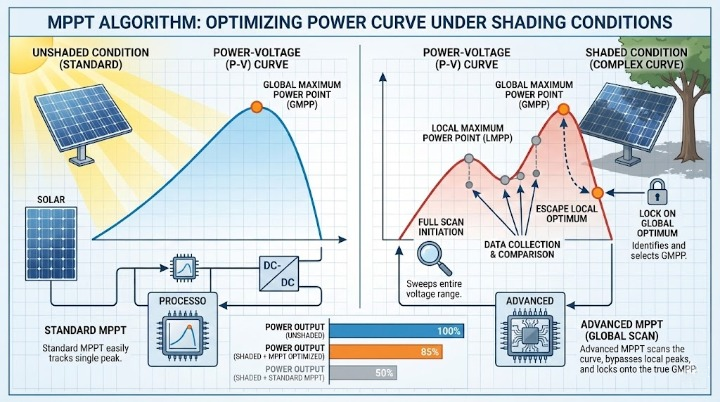
Maximum Power Point Tracking (MPPT) remains the core algorithm of any solar photovoltaic inverter. Modern units now feature multiple MPPTs, sometimes up to 10 or 12 in utility-scale string inverters, to mitigate the effects of partial shading and mismatch between strings. According to data from the International Energy Agency (IEA), systems utilizing advanced shadow management software can increase annual energy yield by up to 4% compared to traditional hardware. Beyond software, physical reliability is critical for maintaining this yield.
For projects in challenging climates, the NKH Off-grid Hybrid Solar Inverter offers a robust solution. It features dual MCU intelligent control technology for excellent performance and intelligent air-cooled heat dissipation to ensure long-term stability. This series also supports WiFi remote monitoring, allowing operators to track energy production in real-time.
Safety Standards and Grid Compliance
As penetration of solar energy increases, grid operators are imposing stricter requirements. The latest IEEE 1547-2018 standards and UL 1741 SB certification are now mandatory in many jurisdictions. These ensure that the solar photovoltaic inverter can support grid stability through voltage and frequency regulation. Furthermore, the integration of AFCI (Arc Fault Circuit Interrupter) 3.0 has significantly reduced the risk of electrical fires, making solar installations safer than ever.
The Rise of Hybrid Systems and VPPs
With the global push toward "Time-of-Use" (ToU) pricing, the demand for hybrid solar photovoltaic inverters has surged. These devices manage both the PV array and the Battery Energy Storage System (BESS). Leading markets in Europe and North America are now leveraging these inverters to create Virtual Power Plants (VPPs). By aggregating thousands of decentralized inverters, VPPs can provide grid services, creating an additional revenue stream for homeowners and businesses alike.
Conclusion
Investing in a high-quality solar photovoltaic inverter is crucial for the long-term ROI of any solar project. In 2025, the focus is clearly on intelligence, safety, and integration. Whether you are an installer or a project developer, choosing a solution that offers high efficiency, robust grid compliance, and future-ready storage compatibility is the key to success.
✉️Email: exportdept@snadi.com.cn
Website:
www.snadisolar.com
☎️WhatsApp / WeChat: +86 18039293535
FAQ
Q1. How do I determine the right inverter capacity for a commercial facility like a hotel or school?
A: Selecting the correct capacity starts with a detailed analysis of your peak energy consumption and future expansion plans. For 2026 projects, we recommend choosing an inverter that can handle 120% to 150% of your current DC solar array capacity (DC/AC ratio). This allows your system to harvest more energy during low light conditions in the morning and evening, ensuring a consistent power supply for high demand appliances in commercial settings without overloading the equipment.
Q2. Why should I prioritize hybrid inverters over traditional string inverters for new 2026 installations?
A: As energy markets evolve, the ability to store and manage power becomes critical for ROI. Hybrid inverters are the all in one solution for 2026 because they manage both solar panels and battery storage systems simultaneously. For farm or business owners, this means you can achieve true energy independence by storing excess power during the day and using it at night or during grid outages, avoiding expensive peak hour utility rates.
Q3. What specific features should I look for to ensure my inverter withstands harsh environments like farms?
A: For agricultural or coastal installations, durability is as important as efficiency. You should look for inverters with an IP54 ingress protection rating, which ensures the unit is completely sealed against dust, irrigation spray, and moisture. Additionally, check for advanced thermal management systems and anti corrosion housing materials, as these features significantly extend the lifespan of the inverter in outdoor environments where temperature fluctuations are common.
Q4. How does remote monitoring technology in 2026 inverters reduce long-term operational costs?
A: Modern smart inverters are equipped with IoT based cloud monitoring that provides real time data at the component level. For solution oriented projects, this means you no longer need to hire on site technicians for routine checks. The system can automatically alert you to performance drops or potential hardware issues via a mobile app, allowing for predictive maintenance. This proactive approach minimizes downtime and ensures that your investment continues to perform at peak efficiency for 20 years or more.

FAQ
The energy consumption standards for household appliances are usually regulated by relevant national departments, and different products have different energy efficiency level standards. Consumers can choose energy-saving products based on their energy efficiency levels.
What are the precautions for repairing and maintaining household appliances?
What is the service life of household appliances?
What issues should be noted when purchasing household appliances?
What issues should be noted when purchasing household appliances?