

Off grid power is growing at an incredible pace. According to the International Energy Agency Renewables 2025 report published in May 2026, renewables will become the largest global energy source by 2030, covering almost 45 percent of all electricity generation.
But here is the real question. How do you actually capture and manage that energy efficiently in the real world? The answer lies in your core equipment. Specifically, the GS Hybrid Solar Inverter is changing how B2B operators manage remote sites. In this comprehensive guide, I will show you exactly how to set up the GS Hybrid Solar Inverter. We will cover capacity calculations, installation steps, and real world case studies so you can maximize your return on investment.
What Is The GS Hybrid Solar Inverter
You need a system that can handle unpredictable and tough conditions. The GS Hybrid Solar Inverter is built exactly for that purpose. It is a multi function unit combining functions of inverter, MPPT solar charger and battery charger. This means you get uninterruptible power support in a highly portable footprint. One of its absolute best features is the rugged exterior. It has waterproof and dustproof characteristics on IP65 level, which means it can be installed outdoors. You do not need to construct expensive indoor electrical rooms just to house your equipment. It is designed from the ground up to survive harsh environmental factors.
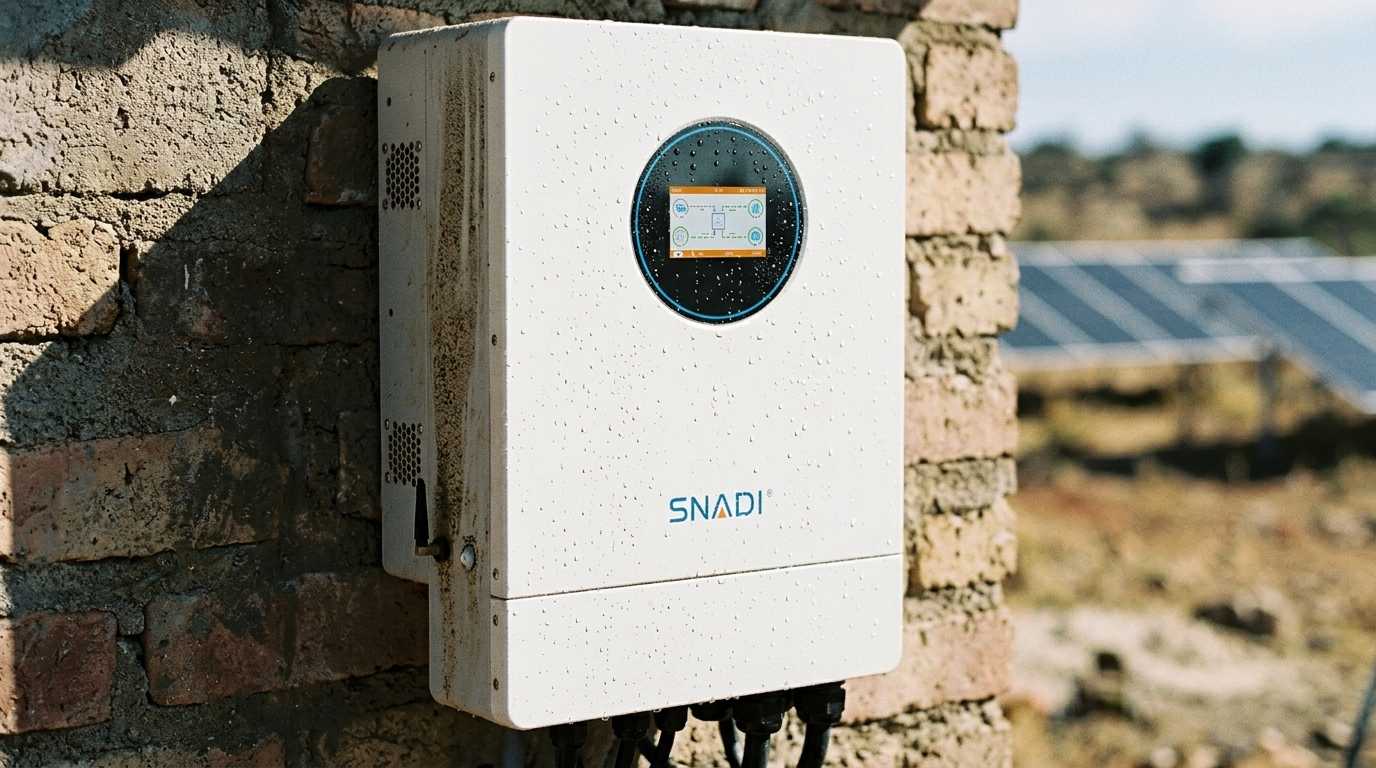
Typical Application Scenarios For Energy Storage
Where does this specific equipment shine? It is perfect for high demand environments that cannot afford a single second of downtime.
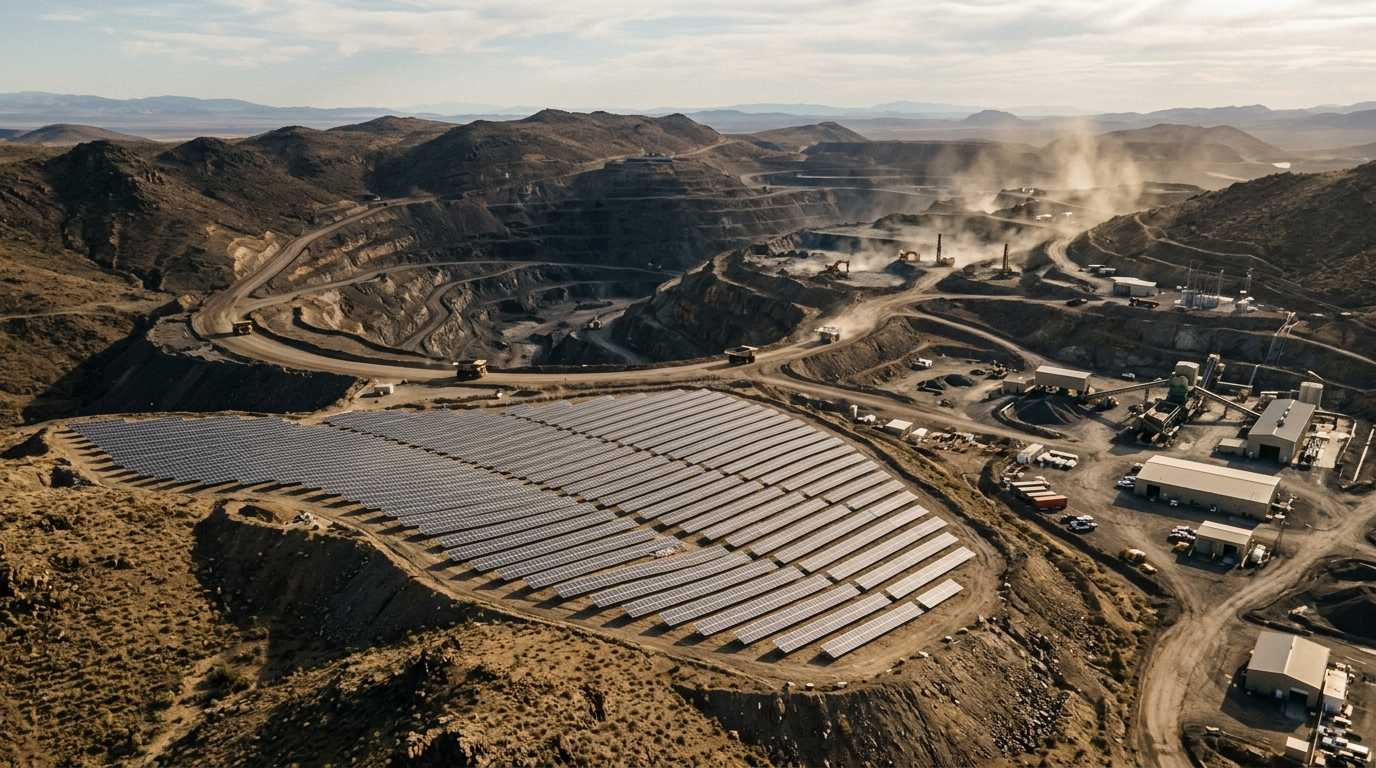
Mining Sites: Dust and moisture quickly destroy standard indoor electronics. The robust IP65 rating protects your capital investment from microscopic debris.
Telecom Towers: Cellular towers require 24/7 continuous uptime. The GS Hybrid Solar Inverter supports parallel connections. You can link up to 6 units. This gives you a massive 39kW three phase output.
Rural Agriculture: Large scale water pumps create heavy electrical starting surges. A specialized energy storage system handles these spikes effortlessly without shutting down.
Off Grid Solar Versus Diesel Generators
Let us look at the hard numbers. Relying on diesel fuel is a massive financial drain for any business. The World Bank Energy Sector Management Assistance Program published their Off Grid Solar Market Trends Report 2024 on October 8 2024. Their data reveals that replacing diesel generators with off grid solar can save commercial businesses up to 12.5 billion USD in fuel costs annually while avoiding 16.6 million metric tons of carbon emissions.
Here is a clear comparison table to help you understand the long term value:
Feature | Traditional Diesel Generator | GS Hybrid Solar Inverter System |
Operating Cost | Extremely high due to constant fuel delivery | Near zero after initial equipment setup |
Carbon Emissions | Heavy carbon footprint and local pollution | Zero emissions during daily operation |
Maintenance | Requires frequent oil changes and filter swaps | Minimal physical upkeep required |
Reliability | Highly prone to mechanical engine failure | High uptime with parallel redundancy |
Noise Pollution | Very loud and disruptive to local wildlife | Completely silent solid state operation |
Sizing And Capacity Calculation Checklist
Before you connect a single copper wire, you must calculate your load accurately. Guessing your capacity is an expensive mistake. Use this technical checklist to size your system correctly.
List All Active Loads: Write down the running wattage of every single device on your site.
Determine Daily Energy Consumption: Multiply the device wattage by the expected hours of use per day. This gives you your total watt hours.
Calculate PV Array Size: Ensure your solar panels generate at least 30 percent more energy than your daily consumption. This buffer accounts for cloudy weather and winter days.
Size The Battery Bank: Your battery must sustain operations during the night. Always include a 20 percent depth of discharge buffer if you are using Lithium ion batteries to protect battery health.
Inverter Margin: Never run an inverter at 100 percent maximum capacity continuously. Always leave a 25 percent power margin. This technical logic prevents thermal throttling and significantly extends component lifespan.
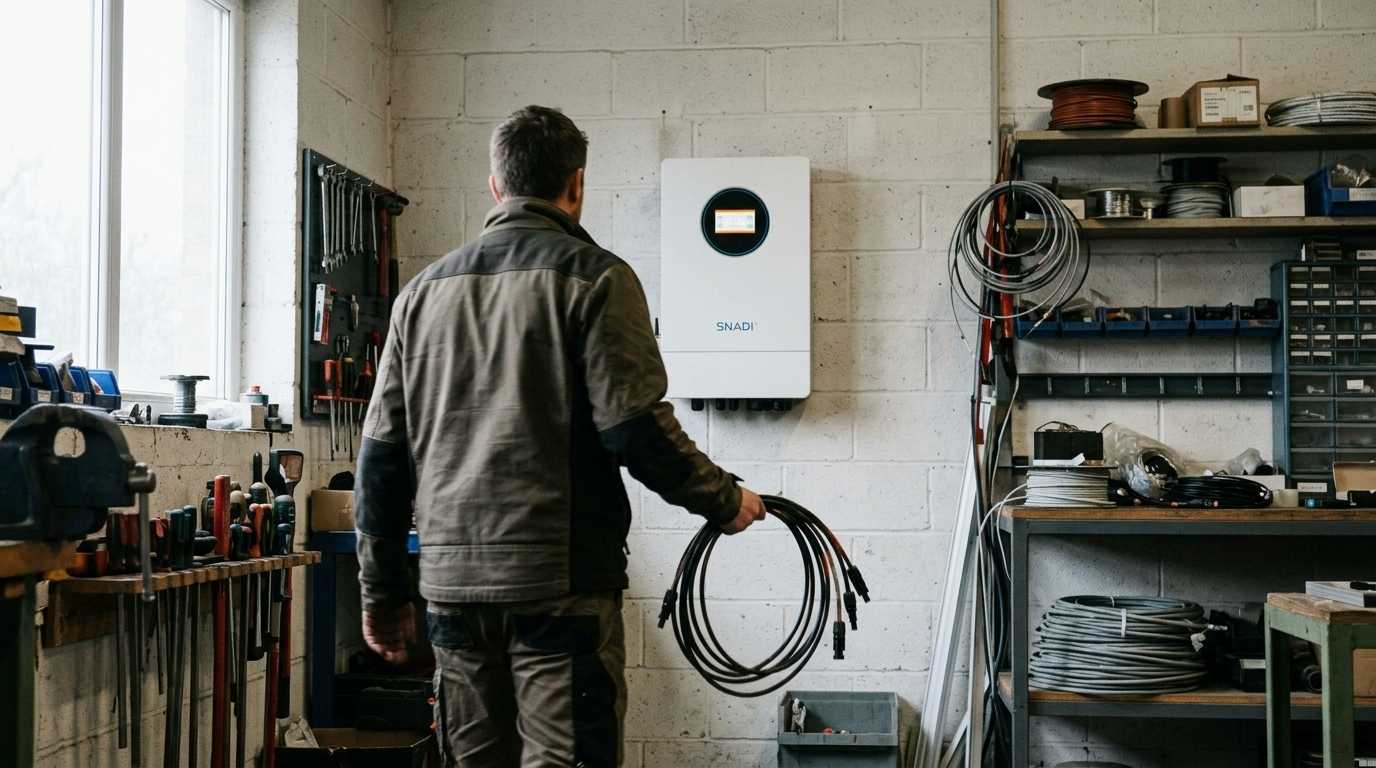
Step By Step Setup For SNADI GS Hybrid Solar Inverter
You must follow these engineering steps carefully to ensure safety and efficiency.
Unpacking And Clearances
Heat is the absolute worst enemy of power electronics. Proper ventilation is non negotiable. When mounting the inverter unit on your wall, allow a clearance of approx 60 cm to the side and 60 cm above and below. This exact spacing guarantees sufficient heat dissipation and prevents system failures.
Wiring The PV Array And Battery
Using the correct cable gauge is critical. For the GS 652048 902 A model, the manual specifically mandates a 2AWG 35mm2 cable for the battery connection with a torque of 2Nm. If you use thinner wires, you risk severe voltage drops and potential electrical fires. For the PV array connections, you must use a 10AWG 6mm2 cable tightened to a torque of 1.2Nm. When preparing your PV cables, use a proper wire stripper to remove the insulation. Strip exactly 8 to 10mm of insulation to ensure a perfect fit in the terminal.
Grounding And Communication Cables
Safety first. You must ground the system. Strip your grounding cable and use an 8AWG 10mm2 wire, fixing the terminal with a torque of 1.4 to 1.6Nm. If you are connecting the Battery Management System communication cable, ensure your RS485 communication cable shall no longer than 3m. Long communication cables lead to data packet loss and synchronization errors.
Configuring The Touch LCD Interface
Your hardware setup is only as good as your software configuration. The GS Hybrid Solar Inverter provides a highly intuitive interface. The display screen is operated by clicking and touching. Please do not use sharp objects to poke the screen to avoid damage.
The system gives you flexible priority settings depending on your specific environment:
SBU Priority: Under this setting, solar energy provides power to the loads as first priority, and battery energy will supply power if solar is not sufficient. This is perfect for completely remote sites with zero grid access.
SUB Priority: If you have an unreliable backup grid, use this setting. Solar energy is charged first, and utility energy will supply power if solar is insufficient.
Supplier Selection Criteria
Choosing the right B2B equipment supplier is just as important as choosing the right inverter hardware. Look for these specific traits before signing any contract:
Technical Engineering Support: Do they offer direct engineering assistance for your initial capacity calculations?
Warranty Terms: Ensure they cover core electronic components for a minimum of five years.
Compliance And Certification: Your supplier must readily provide international compliance documents to clear customs smoothly.
Logistics And Packaging: Verify their packaging methods. Heavy energy storage equipment must be shipped in reinforced wooden crates to survive global transit.
Your Pre Inquiry Checklist
Use this precise checklist to get accurate SNADI/SNAT Solar quotes immediately:
Total daily energy consumption listed in kWh.
Peak power draw required listed in kW.
Environmental conditions at your specific installation site.
Preferred battery chemistry and total required storage capacity.
Single phase or three phase power requirements.
Timeline for project deployment and logistics destination.
Setting up a GS Hybrid Solar Inverter is highly straightforward if you follow the manual and apply solid engineering principles. By sizing your system correctly, using the proper wiring techniques, and configuring the LCD settings to match your environment, you will build an off grid system that operates flawlessly for years.
✉️Email: exportdept@snadi.com.cn
Website:

FAQ
The unit serves as a multi-functional system combining an inverter, MPPT solar charger, and battery charger. Its IP65-rated exterior provides waterproof and dustproof protection, allowing reliable outdoor installation in harsh environments like mining sites and telecom towers without the need for specialized indoor electrical rooms.
How do you accurately calculate the system capacity before installing the inverter?
What is the difference between SBU and SUB priority settings on this hybrid solar inverter?
How does a solar inverter system compare financially to traditional diesel generators?