
In the capital intensive world of utility scale energy, a solar farm is not merely an engineering feat; it is a 25 year financial instrument. While the modules represent the largest physical footprint, the inverter for solar farm applications acts as the "Chief Financial Officer" of the entire asset. Accounting for only 5% to 8% of the initial capital expenditure (CAPEX), this component single handedly dictates 100% of the energy throughput and, consequently, the project's internal rate of return (IRR).
As we navigate the complexities of the 2026 energy market,characterized by volatile spot prices, stricter grid codes, and the integration of Battery Energy Storage Systems (BESS),the criteria for selecting an inverter for solar farm projects have shifted from simple conversion efficiency to long term "bankability" and grid resilience.
Rethinking the Central vs. String Debate
The fundamental architectural choice between central and string inverters has evolved into a debate about risk management and revenue protection.
The Financial Leverage of String Inverters
In modern utility scale layouts, utilizing a high power string inverter for solar farm configurations serves as a hedge against "all or nothing" failures. By distributing power conversion across multiple units, a single failure only impacts a fraction of the site’s capacity. For a 100MW plant, a central inverter failure could result in a 50MW or 100MW loss for days, whereas a string unit failure results in a negligible 300kW loss. This granularity is the financial leverage required to manage module mismatch and partial shading, ensuring the asset continues to generate cash flow even during maintenance cycles.
The Hidden Cost of Downtime
The true cost of an inverter for solar farm projects is not the purchase price, but the cost of lost generation. In 2026, where "Time of Use" (ToU) pricing and frequency regulation markets offer premium rates, even four hours of downtime during peak irradiation can equate to thousands of dollars in lost revenue. String inverters, with their "plug and play" replacement capability, significantly lower the Mean Time to Repair (MTTR) compared to central units that require specialized technicians and heavy machinery.
Comparative Analysis: 25-Year Total Cost of Ownership (TCO)
| Metric | Central Inverter System | String Inverter System (High Power) |
| Initial CAPEX | Lower ($/W) | Moderate to High ($/W) |
| Installation Cost | High (Requires cranes/pads) | Lower (Modular/Standardized) |
| System Availability | 98.5% - 99.0% | 99.5% - 99.9% |
| O&M Complexity | High (Specialized service) | Low (Site staff replacement) |
| Energy Yield (LCOE) | Baseline | 1.5% - 3% Increase (via MPPT) |
| 25-Year TCO | Higher due to mid-life overhaul | Lower due to higher uptime |
Solving the "Grid-Tie" Anxiety:
As renewable penetration increases, the grid is no longer a passive recipient of power. It has become an unstable environment that demands active support from every inverter for solar farm installation.
Grid-Forming Capability: The New "License to Operate"
Traditional "grid-following" inverters rely on a stable voltage and frequency signal from the grid. However, in 2026, grid-forming technology has transitioned from a niche requirement to a mandatory standard in many jurisdictions. An inverter for solar farm projects equipped with grid-forming capabilities can "restart" the grid (Black Start) and provide synthetic inertia. This technology is no longer an optional feature; it is the "entry ticket" for securing grid connection permits and achieving premium electricity pricing in regions with high renewable saturation.
Weak Grid Stability and Reactive Power Compensation
Many utility-scale farms are located in remote areas—deserts or agricultural outskirts—where the grid is "weak" (low Short Circuit Ratio). Without advanced reactive power compensation, these plants face frequent tripping or "derating" during voltage fluctuations. Modern inverters mitigate this by providing $\pm 0.8$ power factor support, ensuring the plant stays connected and profitable even when the external network is volatile.
Engineering for Extreme Volatility
The longevity of a solar asset is directly tied to its ability to withstand environmental stress. For an investor, the core logic is simple: How do we ensure this asset retains its resale value or "securitization" potential in year 20?
Asset Longevity in Harsh Environments
For projects in coastal or high-humidity regions, C5-rated anti-corrosion protection is non-negotiable. Furthermore, as global temperatures rise, the thermal management system of the inverter for solar farm use becomes critical. Liquid-cooling technologies, once reserved for high-end industrial applications, are now becoming standard for utility-scale inverters to prevent derating at temperatures exceeding 45°C. By maintaining optimal operating temperatures, the electronic components age slower, preserving the asset's "bankability" for the full 25-year lifecycle.
| Project Profile | Recommended Inverter Strategy | Key Priority |
| Complex Terrain / Shading | High-Power String Inverters | Yield Optimization |
| Stable, Flat Desert Sites | High-Capacity Central Inverters | Initial CAPEX Efficiency |
| Weak Grid / Remote Areas | Grid-Forming String Inverters | Grid Stability & Compliance |
| Merchant / Spot Market | Hybrid / BESS-Ready Inverters | Revenue Hedging |
Levelized Cost of Energy (LCOE) 2.0: The AI and Storage Edge
To achieve the lowest possible $LCOE$, owners must look beyond hardware and focus on operational intelligence and future-proofing.
Intelligent O&M as a Labor Solution
With global labor shortages and rising technical wages, the "break-fix" model is dead. The modern inverter for solar farm deployment is now an AI-powered diagnostic hub. By utilizing I-V curve diagnosis, these systems can identify string-level issues—such as cracked cells or PID (Potential Induced Degradation)—remotely. Data from 2025-2026 industry surveys suggests that AI-driven predictive maintenance can reduce on-site labor costs by up to 30%, shifting O&M from an unpredictable expense to a controlled, proactive strategy.
Future-Ready for BESS
In 2026, "negative electricity prices" are a common reality during midday peaks. Choosing an inverter for solar farm projects that is "storage-ready" or a DC-coupled hybrid solution is the ultimate tool for energy shifting. This allows the owner to store excess power when prices are low (or negative) and discharge it when the grid demand peaks, effectively hedging against market volatility.
The 1% Efficiency Impact on a 100MW Asset
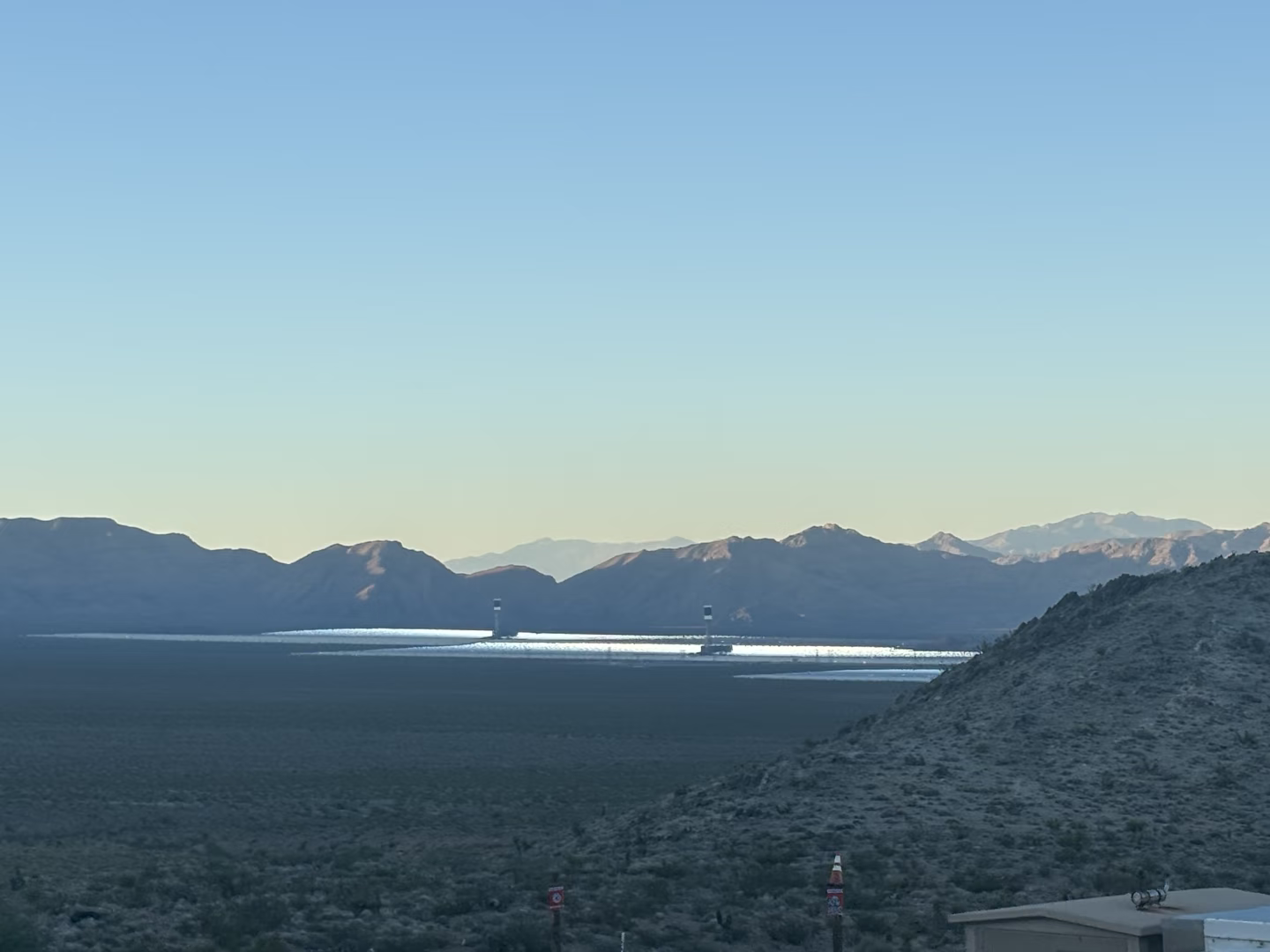
Do you recall the Ivanpah Solar Electric Generating System? At the time, it was considered the paragon of utility-scale renewable energy. Consider a 100MW solar farm in a high-irradiance region like the Mojave Desert. A seemingly minor 1% increase in system efficiency, driven by superior MPPT (Maximum Power Point Tracking) and lower conversion losses in a high-quality inverter for solar farm use, results in approximately 2,000,000 kWh of additional energy per year.
At a conservative Power Purchase Agreement (PPA) price of $0.05 per kWh, this represents $100,000 in additional annual revenue. Over 25 years, factoring in degradation, this amounts to over $2 million in pure profit—more than enough to cover the entire cost of replacing the inverters mid-lifecycle. This proves that selecting an inverter based on the lowest CAPEX is often a multimillion-dollar financial error.
Conclusion
The selection of an inverter for solar farm projects in 2026 is a move away from "buying a component" toward "buying a 25-year revenue guarantee." For developers, the goal is to maximize "bankability"—the ease with which a project can be financed or sold. Investors and banks now scrutinize the inverter's grid-forming capabilities, AI integration, and TCO more than the price tag. Your solar farm must be resilient, intelligent, and ready for the hybrid future.
✉️Email: exportdept@snadi.com.cn
Website:
www.snadisolar.com
☎️WhatsApp / WeChat: +86 18039293535
FAQ
Q1. How does the choice of a solar inverter specifically shorten the payback period for a commercial project?
The inverter is the primary driver of your system's uptime and conversion efficiency. In 2026, high efficiency models minimize energy loss during the DC to AC conversion process, meaning more of the power generated by your panels is either used to offset utility bills or sold back to the grid. By reducing energy waste and minimizing downtime through superior reliability, a premium inverter can shorten your project's Return on Investment (ROI) period by 15% to 20% compared to budget grade alternatives.
Q2. From a financial perspective, why should a farm or school choose string inverters over central inverters?
For mid to large scale projects like those on farms or school campuses, string inverters offer a decentralized risk model that protects your revenue. If a single central inverter fails, the entire solar farm stops producing power, leading to a total loss of income during repairs. In contrast, if one string inverter fails, only a small portion of the array is affected while the rest of the system continues to generate electricity. This granular reliability ensures a steady cash flow and prevents the high cost of emergency large scale technical interventions.
Q3. Will the inverter I choose in 2026 affect my eligibility for green energy tax credits and subsidies?
Yes, many 2026 financial incentives and government subsidies are increasingly tied to smart grid functionality and technical compliance. Modern inverters that feature advanced grid support capabilities and certified cybersecurity protocols often qualify for higher tiers of tax credits or low interest green financing. By investing in an inverter that meets these evolving standards, you not only secure immediate financial aid but also ensure that your asset remains compliant with future utility regulations, avoiding potential fines or forced upgrades.
Q4. How does inverter technology impact the resale or valuation of my property?
A solar equipped property like a hotel or a commercial farm is valued as a productive asset. An inverter system with a proven track record of durability and integrated smart monitoring adds significant "bankable" value to your real estate. Potential buyers or investors look for systems that require minimal O&M (Operation and Maintenance) costs. An inverter that provides transparent, cloud based performance data for over 20 years serves as a financial record of the system's health, making the property more attractive during a sale or refinancing process.

FAQ
The energy consumption standards for household appliances are usually regulated by relevant national departments, and different products have different energy efficiency level standards. Consumers can choose energy-saving products based on their energy efficiency levels.
What are the precautions for repairing and maintaining household appliances?
What is the service life of household appliances?
What issues should be noted when purchasing household appliances?
What issues should be noted when purchasing household appliances?