
As we navigate the fiscal realities of 2026, industrial leaders face a volatile energy landscape where traditional utility models are increasingly becoming a liability. For a high consumption factory or industrial park, electricity is no longer just a utility bill: it is a strategic variable that determines your competitive edge. The transition from viewing electricity as an unavoidable expense to a controllable energy asset is the hallmark of the most successful enterprises this year. Central to this transformation is the hybrid grid inverter, a sophisticated piece of technology that acts as the intelligent heart of a modern power ecosystem.
Sunken cost traps: Why traditional systems fail in 2026?
In previous decades, a simple grid tie system was sufficient to offset some costs. However, in 2026, these systems are essentially a gamble on the weather. A traditional solar setup without storage provides no protection when the grid fails or when utility companies impose extreme peak pricing. When industrial electricity price ratios between peak and valley periods reach 3 to 1, every kilowatt hour of solar energy that you cannot store or intelligently deploy represents lost profit.
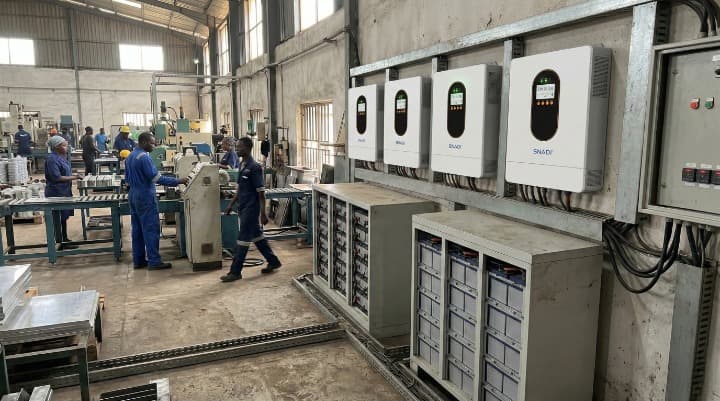
For a precision manufacturing plant, a power flicker is not just a temporary dark room: it is a production line restart that can cost thousands of dollars in ruined materials and labor hours. Relying solely on the grid means your business is at the mercy of aging infrastructure and fluctuating fuel surcharges. Through advanced innovation in power electronics, companies have moved beyond simple conversion to complex energy management. SNADI/SNAT facilities now utilize automated production lines to ensure every component of their energy system meets international quality requirements like ISO 9001.
The financial logic: Transforming expenses into assets
The decision to install a hybrid grid inverter is a financial one, rooted in maximizing Return on Investment (ROI). There are three primary dimensions where this technology shifts the balance sheet.
Dimension One: Peak Shaving and Load Leveling
By utilizing a hybrid grid inverter, a factory can charge its battery bank during the night when rates are at their lowest or via solar during the day. This stored energy is then discharged during peak hours when grid prices are astronomical. This process directly lowers the average cost per kilowatt hour without requiring any change in production schedules.
Dimension Two: Dynamic Capacity and Virtual Transformers
Many factories find their expansion plans halted by the limited capacity of their existing local transformers. Upgrading a transformer involves massive capital expenditure and months of bureaucratic approval. A hybrid grid inverter allows for dynamic capacity expansion. The system can supplement the grid during high load events, acting as a virtual transformer and allowing the facility to run more machinery than the grid connection would normally permit.
Dimension Three: Long Term Stability
Unlike volatile grid prices, the cost of solar energy is locked in on day one. With a service life of 10 years for lithium iron phosphate batteries, a factory can project its energy costs with 95 percent accuracy over the next decade.
Comparison of Industrial Energy Architectures
The following table illustrates why the hybrid approach is the superior choice for industrial applications in the current market.
| Feature | Traditional Grid Tie | Standalone Off Grid | Hybrid Grid Inverter System |
| Grid Interaction | Full Reliance | Zero | Intelligent and Selective |
| Peak Shaving | Impossible | N/A | Highly Effective |
| Energy Efficiency | ~94% | ~92% | Up to 99% |
| Backup Speed | None | Continuous | < 10ms (UPS Grade) |
| Scalability | Fixed | Difficult | Parallel 1 to 6 units |
| Operational Mode | Solar Only | Battery Only | SBU, SUB, SOL, UTL |
Four Core Operating Modes for Automated Savings
A hybrid grid inverter is not a passive device: it is a decision engine that manages power based on your specific factory needs.
Self Consumption Mode: This mode prioritizes using solar power to run your factory in real time. Any excess is stored rather than being sent back to the grid for a pittance. The goal is to reach near zero daytime costs for your primary production floor.
Backup and UPS Mode: For industries like semiconductor or textile manufacturing, power stability is paramount. These systems offer millisecond level switching, ensuring that the production line remains completely unaffected even if the main grid collapses.
Smart Scheduling: You can program the system to align with your factory shifts. If your heavy machinery starts at 8 AM, the system can ensure the batteries are fully charged and ready to handle the initial surge.
Unattended Photovoltaic Operation: In remote industrial sites, the system can manage itself, reaching high conversion efficiency and automatically restarting based on sunlight availability.
Selection Guide: Identifying a true Industrial Heart
In 2026, the market is flooded with consumer grade products that are not fit for industrial environments. To protect your investment, look for these specific indicators of industrial grade engineering.
Scalability and Expansion
Your 100kW requirement today might be 500kW in two years. Choose a hybrid grid inverter that supports parallel operation. High quality systems(like AS On/Off Grid Solar Inverter included) allow for 1 to 6 units to work in synchronization, providing a seamless path for growth.
High Voltage Efficiency
Standard low voltage systems suffer from higher line losses. SNADI/SNAT Solar's industrial solutions often use high voltage battery architectures to reduce losses by 5 to 8 percent. This seemingly small percentage can shorten your investment recovery period by more than six months. Systems now support wide photovoltaic input ranges up to 500VDC or even 950VDC for larger cabinets.
Environmental Resilience
Factories are often dusty or hot environments. An inverter with an IP54 or IP65 waterproof and dustproof design is a necessity, not a luxury. This ensures the longevity of the electronics and reduces maintenance costs over the 10 to 15 year lifespan of the asset.
The Abuja Case Study 2025
In late 2025, a large scale manufacturing facility in Abuja, Nigeria, faced a crisis. Grid reliability had dropped to less than 12 hours per day, and diesel costs for generators were consuming 40 percent of their gross margin. They implemented a 5KW ES series hybrid solution, which was later scaled using parallel units to handle their full factory load.
By moving to a hybrid grid inverter system, the facility achieved a 70 percent reduction in diesel consumption within the first six months. The system provided a stable pure sine wave output, which eliminated the frequent motor failures they experienced on the unstable grid. This case demonstrates that the transition to a hybrid system is not just about environmental goals: it is about the very survival of the business in a high cost environment.
Conclusion
The math of 2026 is simple. You can continue to be a tenant of the power company, paying whatever rates they decide to impose, or you can become the owner of your energy. By investing in a hybrid grid inverter and a robust storage system, you are essentially buying your next 10 years of electricity at a fixed, discounted rate today. The transition from a cost center to an asset starts with a professional assessment. We invite you to move beyond simple product quotes.
✉️Email: exportdept@snadi.com.cn
Website:

FAQ
Hybrid systems enable peak shaving and energy arbitrage, allowing factories to avoid high utility rates and sell excess power back to the grid. This can reduce the payback period to as little as three years when paired with high efficiency solar panels.
Q2: Can hybrid inverters handle heavy industrial motor startups?
Q3: What role does AI play in 2026 industrial energy systems?
Q4:How do high voltage architectures reduce installation costs?
Q5: Is a hybrid system compatible with current green energy standards?