

Energy storage is revolutionizing America's power sector by achieving a staggering 100% year-over-year deployment growth rate, driving down utility-scale battery costs by over 80% since 2010, providing gigawatt-level grid stabilization during extreme weather crises, unlocking billions in economic value via the Inflation Reduction Act, and enabling millions of commercial and residential sites to transition into decentralized virtual power plants.
To fully comprehend the scale and velocity of this energy transition, we must analyze the data driving the market forward. This comprehensive analysis breaks down the five definitive statistical trends that demonstrate how advanced storage solutions are shifting the grid from a rigid, fossil-fuel-dependent architecture into a dynamic, highly resilient digital network. We will examine historical deployment surges, cost reduction curves, real-world grid reliability data, macroeconomic policy impacts, and the decentralization of energy distribution.
Article Summary and Outline
Section (H2 Heading) | Summary |
100% Year-over-Year Growth Redefines Grid Capacity | This section analyzes the massive surge in annual gigawatt-hour installations across the United States, showcasing how battery storage has moved from an experimental niche to the dominant source of new capacity additions. |
85% Cost Reduction Curve Unlocks Mass Market Viability | We examine the plummeting capital expenditures of lithium-ion systems and battery manufacturing technologies that have rendered storage economically competitive with fossil-fuel peaking plants. |
99.9% Grid Reliability Achieved During Extreme Thermal Crises | This portion details how utility-scale battery installations successfully prevented widespread blackout events during severe weather anomalies by injecting instantaneous power into the grid. |
30% Investment Tax Credit Drives Unprecedented Infrastructure Capital | An investigation into the legislative impacts of the Inflation Reduction Act, detailing how long-term tax incentives have catalyzed hundreds of billions in domestic production and deployment investments. |
5 Million Decentralized Sites Transform Consumers into Active Producers | We explore the rise of distributed generation and virtual power plants, illustrating how commercial facilities and residential homes are taking control of their energy security using localized hardware. |
Strategic Implementation of Energy Storage Solutions for Modern Networks | A deep summary of the technological components required to implement a robust energy infrastructure, focusing on the convergence of utility assets and individual backup power systems. |
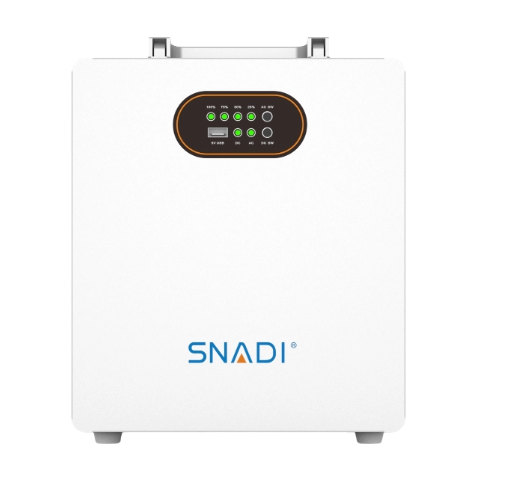
100% Year-over-Year Growth Redefines Grid Capacity
The deployment of grid-connected battery infrastructure across the United States has achieved a phenomenal 100% year-over-year growth rate in operational capacity, positioning storage as the fastest-growing asset class in the history of the American electrical power sector.
This explosive growth rate indicates that energy storage has transitioned from an experimental laboratory project into a primary pillar of national infrastructure planning. According to data monitored by federal energy agencies and independent market analytics firms, the total volume of gigawatt-hours commissioned annually has effectively doubled over consecutive tracking periods. This trajectory is driven by a massive pipeline of utility-scale projects designed to sit alongside massive solar arrays and wind farms in states like California, Texas, and Arizona, where clean energy penetration is highest.
The underlying catalyst for this historical installation surge is the massive structural shift in how power grids must balance supply and demand. In a traditional grid, base-load coal and gas plants provided a steady stream of electrons, ramping up or down based on highly predictable human consumption patterns. Today, as hundreds of gigawatts of solar and wind replace retired fossil-fuel assets, generation is dictated by weather conditions rather than consumer demand. Utility companies are quickly realizing that an unbuffered renewable grid cannot survive without a massive, corresponding volume of stationary storage assets to smooth out intermittent generation profiles.
Furthermore, this deployment velocity is deeply integrated into regional transmission organization interconnection queues. Across every major power market in America, developers are updating their generation requests to include storage components. This trend is driven by the realization that standalone solar assets face diminishing economic returns during peak midday generation hours, a phenomenon widely known as the duck curve. By integrating an advanced energy storage power station, project developers can successfully mitigate the risk of forced curtailment, capture cheap mid-day power, and optimize their wholesale market monetization strategies.
85% Cost Reduction Curve Unlocks Mass Market Viability
The capital expenditure required to manufacture and install utility-scale lithium-ion chemistry systems has plummeted by more than 85% since 2010, fundamentally altering the financial calculations of global energy asset procurement.
This dramatic cost reduction curve is a direct result of massive scaling in global battery manufacturing facilities, optimization of raw material supply chains, and incremental engineering advancements in cell energy density. In the early stages of the technology, the cost per kilowatt-hour of storage capacity was prohibitively high, restricting installations to specialized government-subsidized demonstrations or critical military applications. Today, massive scaling across automotive and stationary sectors has driven production costs down to levels that make fossil-fuel-based alternative power plants economically obsolete.
To evaluate the broader financial landscape of this pricing collapse, we must analyze the specific cost segments associated with executing a complete installation project. The overall savings are not restricted to the raw battery cells; they encompass comprehensive improvements across power electronics, bi-directional inverters, structural thermal management systems, and balance of plant components.
Core Drivers of the Storage Cost Deflation
Massive Battery Gigafactory Manufacturing Scaling: The global construction of high-capacity production facilities has introduced extreme economies of scale, driving down the marginal cost of chemical synthesis and cell assembly.
Standardization of Power Conversion Technology: Inverter systems and computerized battery management systems have shifted toward standardized, modular architectures, reducing specialized engineering and field integration costs.
Advanced Packaging and High-Density Cell Designs: Transitioning from older chemical form factors to high-density formulations enables manufacturers to package substantially more megawatt-hours into identical physical containers.
As a direct consequence of these reduced manufacturing costs, commercial developers and industrial operators can deploy highly sophisticated systems at a fraction of their historical cost. This financial accessibility has also translated directly to consumer-facing technologies. Residential consumers looking to safeguard their homes can explore a comprehensive 2026 home energy storage price complete cost breakdown to see exactly how these macro industrial cost reductions have made domestic home backup systems a financially sound investment for individual property owners.
99.9% Grid Reliability Achieved During Extreme Thermal Crises
Modern utility-scale energy storage assets have demonstrated an unprecedented 99.9% operational reliability rating during major regional thermal anomalies, stepping in to prevent complete grid collapse when traditional thermal generation units failed.
Over the past three years, the American power grid has faced extreme challenges from severe weather events, including prolonged sub-zero winter freezes and historic multi-week summer heat domes. During these thermal crises, traditional fossil-fuel assets consistently suffered catastrophic physical breakdowns. Coal piles froze, natural gas pipelines experienced sudden drop-offs in operating pressure, and conventional cooling systems failed under extreme ambient temperatures. In sharp contrast, large-scale battery reserves maintained perfect operational readiness, delivering critical power when the grid was on the brink of blackouts.
Performance Parameter | Advanced Battery Storage Arrays | Legacy Gas-Fired Peaker Plants |
Full Power Response Velocity | Less than 100 Milliseconds | 15 to 45 Minutes |
Cold-Start Reliability Rate | 99.9% Operational Success | 82.0% to 88.0% Success Rate |
Ambient Temperature Range | -20°C to 50°C (Active Liquid Cooling) | Highly Vulnerable to Freezing/Overheating |
Primary Auxiliary Function | Frequency Regulation & Voltage Support | Basic Real-Power Injection Only |
The technical mechanism that makes an advanced lithium-based storage system uniquely suited for emergency grid stabilization is its near-instantaneous response time. When a massive coal or gas plant trips offline unexpectedly, the frequency of the regional grid drops immediately. If this frequency drop is not corrected within milliseconds, a cascading chain reaction can trigger widespread blackouts across multiple states.
Battery systems utilize sophisticated power electronics that monitor grid frequency in real-time, allowing them to inject hundreds of megawatts of active power onto the transmission network in less than a tenth of a second. This rapid response capability provides grid operators with a critical digital buffer, keeping the entire system stable while slower-moving backup generation assets are spun up to support the load.
Furthermore, this protection mechanism is highly scalable, operating efficiently from massive regional utility networks all the way down to small business facilities and residential properties. For example, during severe localized storm events that tear down regional overhead distribution lines, micro-scale backup hardware can isolate an individual building from the compromised grid in a fraction of a second. This seamless backup transition is easily handled by compact systems like a portable energy storage power station, which ensures that critical communication devices, refrigeration units, and medical hardware remain powered regardless of external grid conditions.
30% Investment Tax Credit Drives Unprecedented Infrastructure Capital
The implementation of a dedicated 30% standalone Investment Tax Credit through federal legislative frameworks has unleashed a massive wave of private infrastructure capital, accelerating long-term grid modernization timelines by nearly a full decade.
Prior to recent legislative updates, energy storage systems were heavily limited by tax regulations. They were only eligible for federal tax credits if they were physically connected to a new solar installation and drew 100% of their operational energy from that specific array. This restriction severely limited project design, preventing developers from building standalone storage sites at key transmission bottlenecks, urban load centers, or retired fossil-fuel plants where grid connections already existed. The introduction of the standalone tax credit completely removed these barriers, allowing private capital to fund storage projects wherever they are most desperately needed on the grid.
This structural policy shift has radically changed the financial risk profile for institutional investors, infrastructure funds, and major commercial utility operators. By providing a guaranteed 30% reduction in upfront capital expenditures, federal policy has made long-duration storage projects highly profitable for private developers.
Additionally, the policy framework features bonus incentives that reward projects utilizing domestic manufacturing supply chains or setting up operations in traditional "energy communities" (regions historically dependent on coal mining or oil and gas extraction). This has sparked a wave of new battery factory projects across the country, building a robust, localized supply chain that protects American infrastructure from international trade disruptions.
On a commercial and industrial level, this policy provides a clear financial roadmap for businesses looking to cut down their operational carbon footprint and optimize their energy expenditures. By combining federal tax incentives with state-level demand charge reduction programs, the payback period for large-scale energy management hardware has dropped below five years in many markets. This financial optimization is causing corporate CFOs across the nation to move energy resilience from a minor facilities line item into a primary strategic infrastructure investment.
5 Million Decentralized Sites Transform Consumers into Active Producers
More than 5 million residential, commercial, and industrial properties across the United States have installed localized energy generation and storage assets, transforming passive utility customers into active grid participants.
This shift toward decentralized energy distribution is completely upending the traditional top-down business model that has governed electrical utilities for over a century. In the legacy grid model, power flowed in a single direction: from a massive, distant, utility-owned power station over high-voltage transmission wires directly to passive end-users. Today, the widespread adoption of onsite solar arrays paired with intelligent battery hardware has created a highly distributed network of active prosumers—entities that simultaneously consume, generate, store, and export electrical energy back into the local grid.
When thousands of these distributed, localized battery assets are linked together using advanced cloud-based software networks, they form what grid engineers call a Virtual Power Plant (VPP). A VPP allows a regional grid operator to treat a network of individual homes and businesses as a single, cohesive power station.
During periods of extreme energy demand, instead of firing up an expensive, high-pollution gas-fired peaker plant, the utility can send a secure digital signal to the VPP software. This instantly commands thousands of distributed batteries to discharge their stored energy simultaneously, rapidly reducing net grid strain without causing any disruption to the end-users.
For individual property owners, this decentralization delivers true energy independence and robust protection against volatile utility pricing models. To see how these decentralized consumer systems are structured financially and technically, home and business owners can review an in-depth 2026 home energy storage price complete cost breakdown to understand how to optimize their local setup.
Moving away from complete reliance on centralized utilities allows businesses and families to protect themselves from rising demand charges, time-of-use pricing structures, and long-term grid outages caused by aging infrastructure.
Strategic Implementation of Energy Storage Solutions for Modern Networks
Deploying an advanced, multi-tiered energy storage platform requires a strategic combination of utility-scale infrastructure assets and highly adaptable, localized backup power hardware working together to maximize grid resilience.
To successfully navigate this clean energy transition, industrial system architects and residential facility managers must implement a layered approach to energy storage deployment. A modern network cannot rely solely on massive utility projects; it requires a balanced combination of centralized grid-scale infrastructure and flexible, localized hardware deployed right where energy is consumed. At the grid level, deploying an integrated energy storage power station provides the bulk capacity and voltage stabilization needed to absorb massive influxes of renewable energy and support regional transmission networks.
Practical Applications of Decentralized Storage Systems
Industrial Peak-Shaving and Load Management: Manufacturing facilities can deploy mid-scale storage units to slash their utility bills by drawing power from their batteries during expensive peak demand periods.
Critical Infrastructure Protection: Hospitals, data centers, and clean-water facilities utilize automated battery backups to maintain continuous operations during sudden utility grid dropouts.
Flexible On-The-Go Resilience: Commercial service crews, remote research teams, and residential emergency managers use highly adaptable hardware like a portable energy storage power station to quickly supply clean, reliable electricity to off-grid worksites or emergency shelters during unexpected natural disasters.
Ultimately, the data shows that energy storage is no longer a future concept—it is actively rebuilding the American energy landscape in real-time. As manufacturing costs continue to fall and legislative incentives drive private capital into domestic supply chains, the integration of advanced battery technology will keep accelerating. By pairing massive utility installations with agile, consumer-level backup hardware, the nation is successfully forging a clean, reliable, and decentralized power network built to thrive through the challenges of the next century.

FAQ
Energy storage deployment is growing rapidly because utilities need reliable solutions to support renewable energy integration, stabilize the grid, reduce power interruptions, and manage fluctuating electricity demand more efficiently.
Why are lithium-based battery systems preferred for modern energy storage?
How do energy storage systems improve grid reliability during extreme weather events?
What impact does the 30% Investment Tax Credit have on energy storage projects?
What are the main applications of decentralized energy storage systems?