

For decades, the agricultural sector viewed electricity and fuel as sunk costs, unavoidable monthly drains on the bottom line. For modern agricultural operations, energy is no longer a liability to be paid; it is a strategic asset to be managed. By integrating a high performance li ion battery storage system, remote farms are achieving total energy autonomy, shielding themselves from volatile fuel prices and ensuring that critical infrastructure never goes dark.
From Diesel Dependency to Solar First Financial Models
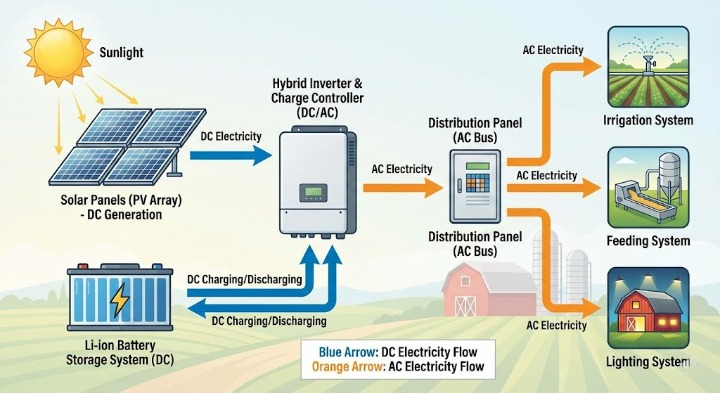
While a generator has a lower initial purchase price, its operating cost is astronomical when calculated over a ten years horizon. According to 2024 agricultural energy reports from the International Renewable Energy Agency (IRENA), the cost of lithium based storage has dropped significantly, making the initial investment in a li ion battery storage system recoverable within 3.5 to 4 years through fuel savings alone. In a solar first model, the sun provides the energy for daily operations like irrigation and machinery charging, while the ESS (Energy Storage System) captures the surplus. This allows the farm to function during the night or peak demand periods without burning a single drop of fuel.
For a poultry farm or a temperature-controlled greenhouse, a power failure is not just an inconvenience; it is a financial catastrophe. A properly sized li ion battery storage system ensures that even during three consecutive days of heavy rain or overcast weather, automated feeding systems and climate controls remain operational. The peace of mind that comes from knowing your livestock is safe is a value that goes far beyond the balance sheet.
Grade A Cells: The Insurance Policy for Your Production Line
Not all energy storage is created equal. In the harsh environment of a farm, characterized by dust, humidity, and extreme temperature swings, the internal components of your ESS determine whether your investment lasts three years or fifteen. The difference between Grade A and Grade B cells is the cornerstone of system reliability. Grade A cells are manufactured to the highest standards of capacity consistency and internal resistance. In an agricultural setting, where a large 10HP water pump might draw a massive surge of current upon startup, a li ion battery storage system equipped with Grade A cells can handle the discharge stress without significant voltage drops. Choosing Grade A ensures the system maintains its integrity over 6,000 cycles. When you consider that 6,000 cycles represent over 15 years of daily use, the premium paid for high quality cells becomes the best insurance policy a farm owner can buy.
Scalability and Integration for Agricultural Expansion
One of the greatest myths in renewable energy is that you must buy a massive system all at once. For most farms, a modular, phased approach is more financially sustainable.
The Logic of Modular Investment
Modern li ion battery storage system designs utilize a LEGO style architecture. An owner might start with a 15kWh unit to handle essential lighting, security, and communications. As the farm expands or moves toward heavy irrigation, additional battery modules can be stacked in parallel. This technical path relies on advanced communication protocols. By using standardized CAN or RS485 communication, new battery modules can seamlessly integrate with the existing bank, even if they were purchased years apart, where capital is deployed only when the farm's production capacity requires it.
Seamless Inverter Compatibility
The battery is only half of the equation; it must speak the same language as your inverter. SNADI Solar's high tier ESS solutions are preconfigured to communicate with leading brands like Victron, Deye, and Growatt. This protocol ensures that the inverter knows the exact State of Charge (SoC) and temperature of the li ion battery storage system, allowing it to optimize charging speeds and prolong the battery's life.
Comparison of lithium ion battery and lead acid battery in solar energy system
To understand the value of lithium technology, one must compare it to the traditional alternative: lead acid batteries. While lead acid is cheaper at the point of sale, it is a liability in heavy cycle agricultural environments.
Deep TCO Analysis: Lead Acid vs Li Ion Battery Storage System
| Metric | Lead Acid Battery | Li Ion ESS (LFP) | Owner Benefit |
| Depth of Discharge (DoD) | 50% | 90% | 40% more usable energy per unit |
| Service Life | 2 - 3 Years | 10 - 15 Years | Avoids 4 separate replacement cycles |
| Maintenance Requirement | Monthly (Watering/Cleaning) | Zero Maintenance | Saves $500+ annually in labor costs |
| Charging Efficiency | 75% - 85% | 95% - 98% | 15% less energy wasted as heat |
| Temperature Resilience | Poor (Capacity drops in cold) | High (Operates -20°C to 60°C) | Reliable power in all seasons |
Deployment and Maintenance
A li ion battery storage system is a 10 years investment, but its lifespan depends on how it is installed and maintained in the farm environment. Farms are notoriously difficult environments for electronics. Dust from tilling and high humidity from irrigation can wreak havoc. You should ensure the enclosure is rated for dust and moisture protection. Remember to install the battery bank at least 50cm off the ground to avoid moisture and pests. While lithium batteries generate less heat than lead acid, proper airflow is still required to maintain the optimal operating temperature of 25°C.
Conclusion
To ensure your system reaches its full potential, follow this simple quarterly routine:
Visual Inspection: Check for any debris or dust buildup around the ventilation ports.
Firmware Updates: Ensure the BMS and Inverter are running the latest software to maximize efficiency.
Terminal Check: Verify that all cable connections remain tight and free of corrosion.
Remote Monitoring: Utilize the mobile app to review the State of Health (SoH) and ensure all modules are discharging equally.
By following these protocols, your li ion battery storage system stops being a piece of equipment and starts being the heartbeat of your farm's independence.
✉️Email: exportdept@snadi.com.cn
Website:
☎️WhatsApp / WeChat: +86 18039293535
FAQ
Q1. What is the estimated payback period for a farm scale Li ion battery storage system?
For most agricultural operations, the return on investment (ROI) typically ranges from 5 to 8 years. This timeline is achieved by eliminating peak demand charges and shifting energy usage from expensive daytime grid rates to stored solar power. Given that high quality lithium ion systems in 2026 often come with a 10 years warranty and a 15 years operational life, the system functions as a revenue generating asset for many years after the initial cost has been recovered through energy savings and potential tax incentives.
Q2. Can these battery systems withstand the dusty and temperature volatile environments of a working farm?
Yes, commercial grade lithium ion systems designed for agriculture are housed in ruggedized enclosures with high ingress protection ratings, such as IP54. These units are specifically engineered to keep out dust, debris, and moisture. Furthermore, integrated smart thermal management systems ensure that the batteries operate within an optimal temperature range, even when installed in unconditioned outbuildings or exposed to summer heatwaves, preventing performance degradation and ensuring long term reliability in harsh field conditions.
Q3. How does a Li ion storage system handle high surge equipment like large irrigation pumps?
One of the primary advantages of modern lithium ion technology is its high discharge rate, which is essential for starting heavy inductive loads common in farming, such as irrigation pumps or grain dryers. These systems act as a buffer, providing the immediate burst of apparent power needed to start motors without tripping the main breaker or incurring heavy utility penalties. By managing these surges locally, the battery system protects your electrical infrastructure and ensures that critical agricultural processes remain uninterrupted.
Q4. Is it possible to integrate a new battery system with my farm's existing diesel generator?
Absolutely. Integrating battery storage with an existing generator creates a highly efficient hybrid microgrid. In this setup, the battery acts as the primary source of power, and the generator only kicks in during prolonged periods of low solar production or when the battery reaches a low state of charge. This significantly reduces the generator's run time, leading to lower fuel consumption, reduced maintenance costs, and a much quieter environment for livestock, further enhancing the asset value of your energy system.

FAQ
The energy consumption standards for household appliances are usually regulated by relevant national departments, and different products have different energy efficiency level standards. Consumers can choose energy-saving products based on their energy efficiency levels.
What are the precautions for repairing and maintaining household appliances?
What is the service life of household appliances?
What issues should be noted when purchasing household appliances?
What issues should be noted when purchasing household appliances?