

In the competitive landscape of 2026, luxury hospitality has moved beyond the experience economy into the resilience economy. For off grid resorts, boutique lodges, and island retreats, the definition of luxury has shifted from gold plated fixtures to the invisible, unshakeable reliability of infrastructure. The era of noisy, polluting diesel generators is over, not just because of environmental mandates, but because of the bottom line. At the heart of this transition is a single, critical asset: the home power cell.
Why Energy Cell Quality Dictates Your Hotel Ratings in 2026
For a resort owner in a remote location, the technical specifications of a battery might seem like a secondary concern. However, in an off grid environment, electricity is the lifeblood of the service promise. In 2026, guest expectations for always on connectivity, climate control, and gourmet amenities are non negotiable, regardless of the hotel's geographic isolation. A failure in the energy storage system at 2:00 AM does not just result in a dark room; it results in a refund request, a scathing 1 star review on platforms like TripAdvisor or Booking.com, and long term damage to the brand's digital footprint.
The shift to a high performance home power cell system allows hotels to transition into Silent Operation. Traditional diesel generators create acoustic and olfactory pollution that directly contradicts the pristine nature USP (Unique Selling Proposition) of off grid retreats. By utilizing advanced Lithium Iron Phosphate (LFP) cells, hotels transform their energy infrastructure into a silent asset. This silent operation is a marketable luxury. According to the 2025 Sustainable Travel Report by Booking.com, 83% of high net worth travelers now prioritize low impact stays, and they are willing to pay a 15-20% premium for resorts that offer true energy autonomy without the hum of a combustion engine.
Asset Safety and Operational Lifespan
When evaluating energy storage, hotel owners often find themselves choosing between initial capital expenditure (CAPEX) and long term operational stability. In 2026, the industry consensus has solidified: LFP (Lithium Iron Phosphate) is the only viable financial logic for the hospitality sector. While newer chemistries like Sodium ion have entered the market, LFP remains the gold standard for Bankability. For a hotel, an energy system must be a 10 to 15 years asset. A high quality home power cell utilizing LFP technology offers upwards of 6,000 to 8,000 cycles at 80% Depth of Discharge (DoD). This translates to nearly 15 years of daily cycling with minimal degradation.
Safety in hospitality is not just about compliance; it is about risk mitigation. Thermal stability is the primary reason LFP dominates. In tropical or remote off grid locations where ambient temperatures can be extreme, the risk of thermal runaway must be zero. LFP’s inherent chemical stability ensures that even in the event of a physical puncture or extreme heat, the risk of fire is virtually non existent. This safety profile is what makes the system insurable and bankable in the eyes of global hospitality investors.
Technical Indicators as Revenue Drivers
To an operator, a home power cell is more than a storage unit; it is a cash register that dictates the efficiency of the entire property. Understanding specific technical metrics is essential for maximizing ROI.
Depth of Discharge (DoD) and Effective Capacity
A 100kWh system with a 90% DoD provides significantly more usable energy than a 100kWh system limited to 70% DoD to preserve lifespan. In 2026, high end systems allow for a 95% DoD without compromising the cell’s integrity. This means more of your harvested solar energy is available to power guest-facing services like air conditioning and desalination plants, reducing the "stranded asset" cost.
System Redundancy and Scalability
Hospitality assets are rarely static. A resort that starts with 20 villas may expand to 30 within three years. The home power cell architecture must be modular. Professional grade ESS (Energy Storage Systems) in 2026 are designed for Hot Swap scalability, allowing owners to add capacity without shutting down the entire microgrid. This flexibility ensures that the energy system grows in lockstep with the hotel's revenue generating footprint.
Thermal Management in Extreme Climates
For hotels in regions like Southeast Asia, the Middle East, or the Caribbean, heat is the enemy of efficiency. Advanced liquid cooling or sophisticated air channeling in the battery enclosure ensures that the cells operate within their sweet spot (25°C to 30°C). Efficient thermal management ensures that power output does not de rate during peak demand periods, such as midday when air conditioning loads are at their highest.
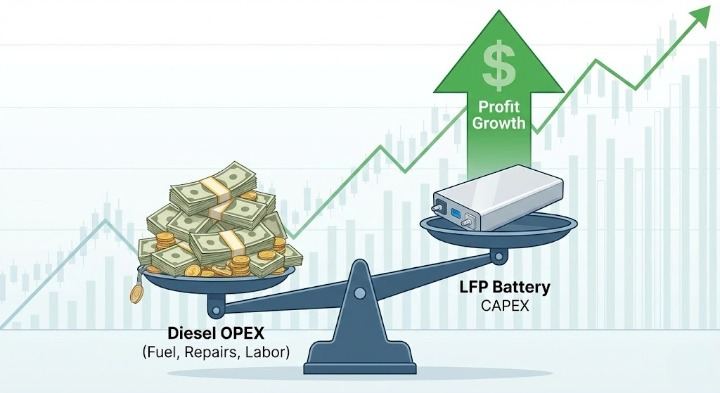
The transition to a solar plus storage model is a shift from a high variable cost model (OPEX) to a fixed asset model (CAPEX).
The Cost-Benefit Analysis (10-Year Outlook)
| Cost Item | Traditional Diesel Mode (10 Years) | Off-Grid ESS Solution (10 Years) | Owner's Direct Benefit |
| Energy Expenditure | Volatile fuipping costs | $0 (Sunlight is free) | Locked-in energy costs for 10+ years |
| Maintenance Frequency | Every 250–500 hours (Oil, filters, overhauls) | Annual system health check | 90% reduction in technical labor |
| Operational Noise | Constant 75dB+ (requires soundproofing) | 0dB (Silent Operation) | Higher room rates for "Tranquility" |
| Brand Value | "Old World" carbon-heavy image | "Green Globe" / LEED certified | 15% increase in occupancy from eco-conscious segments |
Conclusion
In off grid energy planning, the most critical metric is Autonomy Days. This refers to the number of days the hotel can maintain full operations during consecutive days of low solar irradiation. For a premium resort, the goal is typically 2.5 to 3 days of autonomy. This isn't just about survival; it's about maintaining brand dignity. During a three days storm, a resort with a robust home power cell strategy can continue to offer heated pools, refrigerated fine dining, and high speed internet, while competitors relying on fuel logistics may be forced to ration power or face fuel shortages due to disrupted supply chains.
Today, an hotel is only as resilient as its storage system. You are not simply purchasing a home power cell; you are purchasing absolute control over your property’s operational future. By choosing high quality LFP technology and focusing on depth of discharge and thermal resilience, owners are building a power fortress that protects their guests, their reputation, and their bottom line.
✉️Email: exportdept@snadi.com.cn
Website:
☎️WhatsApp / WeChat: +86 18039293535
FAQ
Q1. How does a power cell system specifically enhance the guest experience during a power outage?
In the hospitality industry, a power outage can lead to negative reviews and lost revenue. A power cell system acts as an instantaneous backup source, ensuring that critical services such as WiFi, electronic room locks, and emergency lighting remain operational without a second of interruption. Unlike noisy diesel generators, these battery systems operate silently, allowing guests to continue their stay in comfort and privacy without the disturbance of engine noise or exhaust fumes.
Q2. Is the homestyle power cell powerful enough to handle the heavy energy loads of a commercial hotel?
While the technology is often referred to as a home power cell, the 2026 models are designed with a modular architecture that is perfectly suited for commercial applications. For a boutique hotel or resort, multiple units can be connected in parallel to create a large scale energy reservoir. This setup can easily handle the high surge currents required by central air conditioning systems, industrial kitchen equipment, and elevator motors, providing a scalable solution that grows with your facility's needs.
Q3. How does having an on site energy storage system impact a hotel's sustainability rating and brand image?
Modern travelers, especially in the luxury and corporate sectors, are increasingly choosing accommodations based on their environmental footprint. Implementing a power cell system allows your hotel to achieve higher ESG (Environmental, Social, and Governance) scores and qualify for prestigious green building certifications. By promoting your facility as a leader in renewable energy and energy independence, you can attract eco conscious guests and potentially command higher room rates, turning your energy infrastructure into a powerful marketing asset.

FAQ
The energy consumption standards for household appliances are usually regulated by relevant national departments, and different products have different energy efficiency level standards. Consumers can choose energy-saving products based on their energy efficiency levels.
What are the precautions for repairing and maintaining household appliances?
What is the service life of household appliances?
What issues should be noted when purchasing household appliances?
What issues should be noted when purchasing household appliances?