

Many buyers search for commerical solar panels because they want lower electricity cost, but the real question is broader. A business solar project has to reduce operating cost without creating roof damage, production disruption, insurance concerns, or a system that stops being monitored after commissioning.
For a Chilean warehouse, hotel, factory, cold room, office, or retail site, solar is worth reviewing when the site has daytime load, usable roof or land, clear electricity bills, and a maintenance plan. The system should be sized around the load curve first and available area second.
Are Commercial Solar Panels Worth It for Your Business?
A business solar project is not a larger home system. It has more stakeholders, stricter access rules, higher safety expectations, and more financial risk if the system is poorly sized. The first question should be which operating problem the system must solve.
A store may want to reduce daytime purchases from the grid. A hotel may want selected backup and cost control. A factory may want to reduce demand peaks and keep selected production loads running. A cold storage site may value outage protection more than energy savings alone.
Practical check: collect 12 months of electricity bills and a simple load schedule before asking for system size. The same 100 kW rooftop system can produce very different value depending on when the site consumes power.
Common Commercial Solar Panel Applications
Rooftop solar for warehouses and retail
Rooftop solar works when roof structure, waterproofing, shading, access paths, and fire routes are suitable. It often aligns well with daytime business loads because it uses existing space.
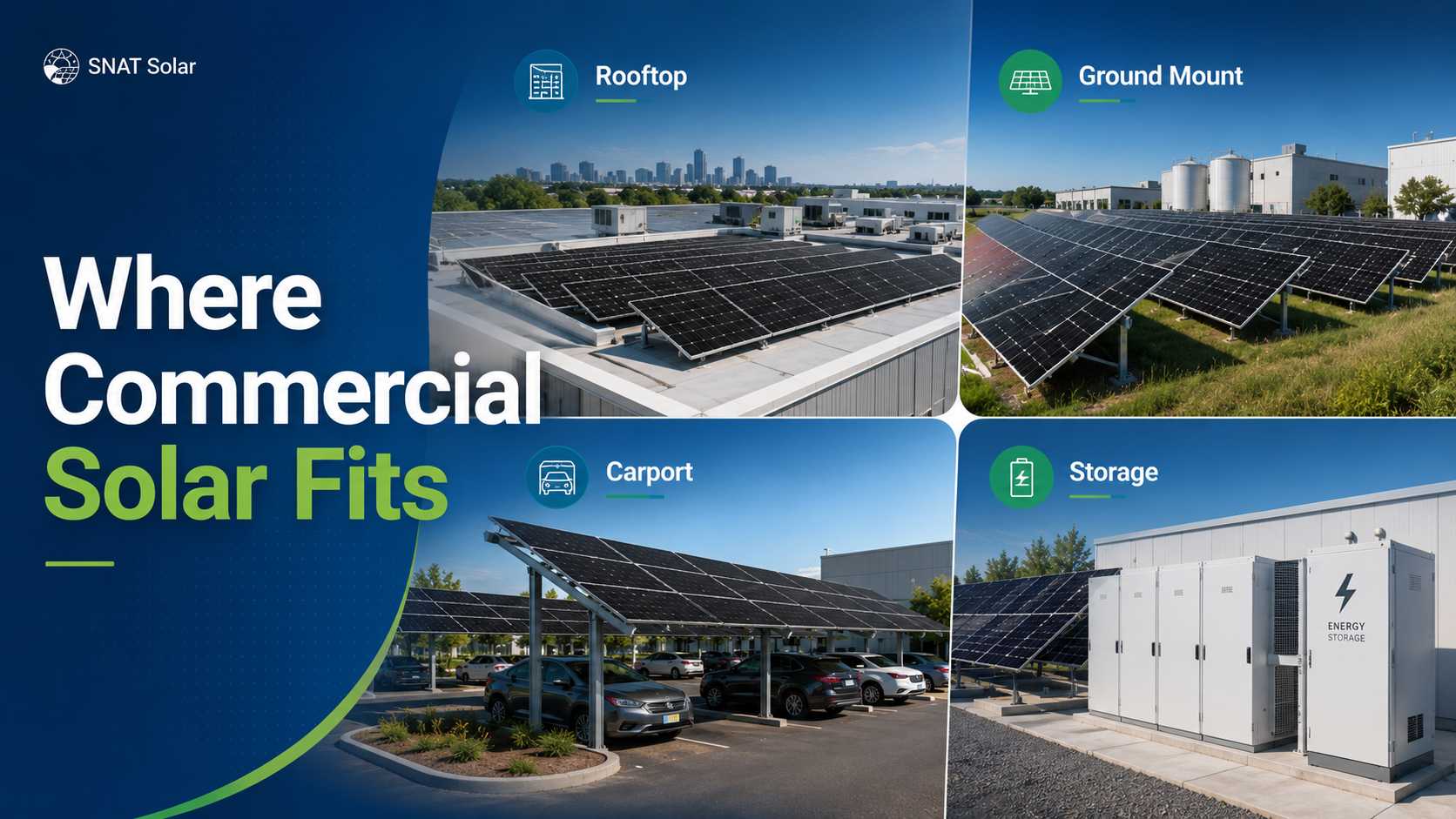
Ground mount solar for factories and campuses
Ground mount systems can be easier to clean, inspect, and expand. The tradeoff is land use, fencing, cable routing, and site security.
Solar carports for parking areas
Solar carports can add shade and energy production. They fit sites where customer or staff parking value helps justify the extra structure cost.
Solar plus storage for critical loads
Storage is useful when the buyer faces demand charges, weak grid supply, or loads that cannot stop. The battery should protect selected critical loads rather than the whole building by default.
Application | ROI driver | CAPEX pressure | Operating risk | Best fit |
Rooftop solar | Daytime self use | Medium | Roof access and waterproofing | Warehouses and retail |
Ground mount solar | Easy service and expansion | Medium | Land and cable routing | Factories and campuses |
Solar carport | Shade plus energy | Higher | Structure cost | Hotels and parking areas |
Solar plus storage | Peak shaving and backup | Higher | Control settings and battery sizing | Cold rooms and C and I sites |
Commercial Solar ROI Factors
Payback changes with CAPEX, daytime self use, tariff design, demand charges, incentives, financing, downtime value, O and M, monitoring, and module degradation. If the site consumes most energy at night, solar alone may need storage or load shifting to make financial sense.
ROI factor | Why it matters | Buyer action |
Daytime load | Raises self use value | Compare load curve with PV output |
Roof condition | Affects cost and risk | Inspect before quote approval |
Tariff and demand charges | Changes savings logic | Review bills and peak periods |
Storage need | Adds CAPEX but can protect loads | Size critical loads first |
Monitoring | Protects long term yield | Require alerts and performance reports |
Maintenance | Reduces avoidable loss | Define cleaning and inspection plan |
SNADI/SNAT Solar Panel and 125 kW 241 kWh Integrated Solar Storage Hybrid Power System
Our High Efficiency N Type Solar Panel supports commercial rooftop and facility projects that need module options from 200 W to 590 W with published electrical data. The product page lists module efficiency values, temperature coefficients, operating temperature, junction box ratings, and commercial system positioning.
When storage is part of the business case, our 125 kW 241 kWh Integrated Solar Storage Hybrid Power System fits projects that need peak shaving, self use improvement, and selected critical load support. Its published positioning covers 125 kW output, 241 kWh lithium iron phosphate capacity, EMS control, backup power, peak demand reduction, and stable supply for C and I users.
We focus on practical residential, small commercial, and C and I inverter, lithium battery, solar panel, and storage applications.
System Design Checklist Before Quotes
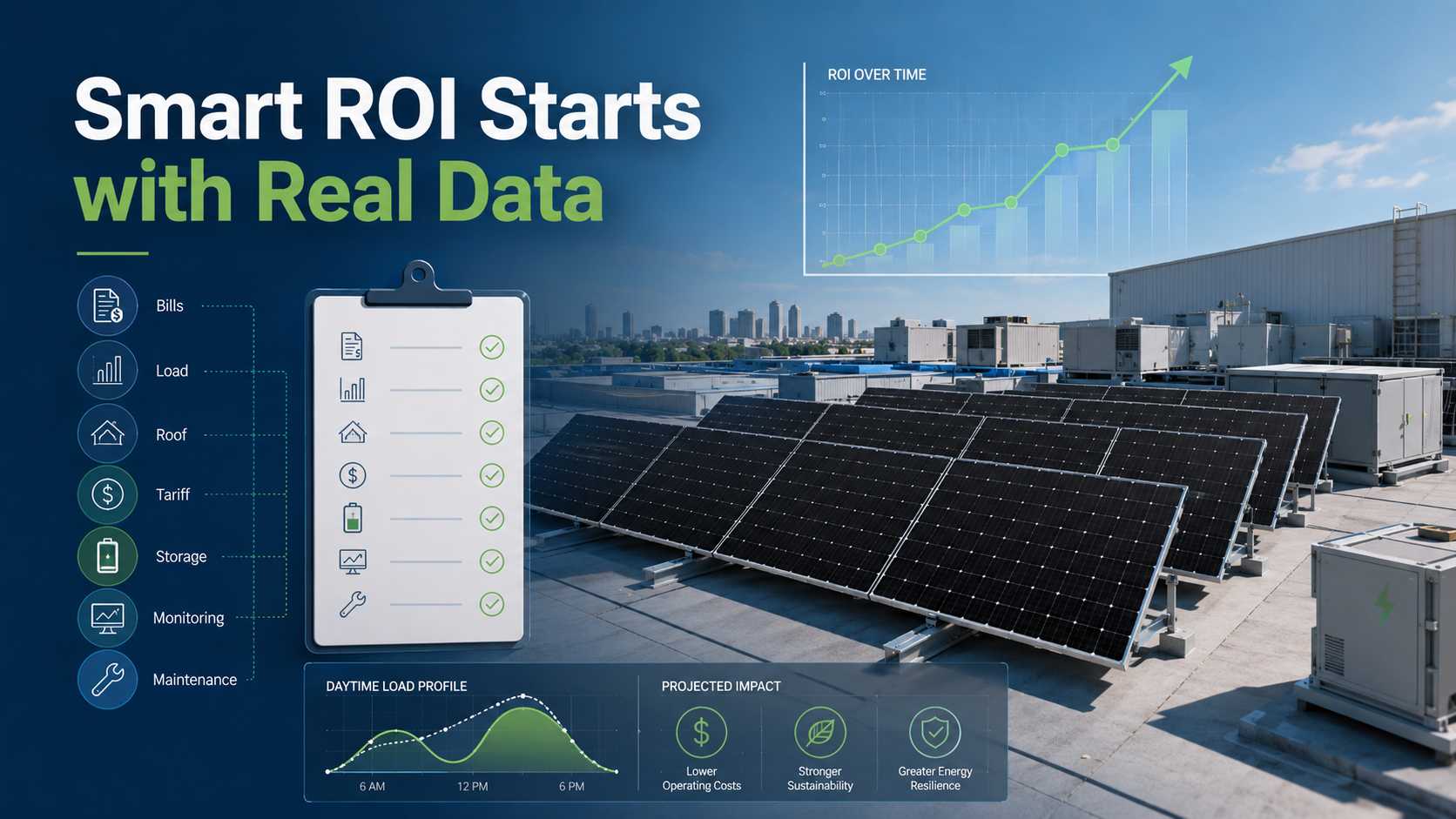
Before requesting quotes, prepare roof drawings, electricity bills, a load schedule, site photos, structural notes, fire access requirements, planned production windows, and expected expansion. If storage is being considered, identify the loads that must remain online first.
The buyer should also ask who owns data after installation. A commercial PV system without monitoring can lose yield for months before anyone notices. The maintenance plan should define cleaning, inspection, inverter alerts, performance ratio review, and a clear service contact path.
Conclusion
Commercial solar panels can reduce energy cost and improve resilience when the system is designed around real load, site limits, tariff exposure, monitoring, and maintenance. For Chilean small commercial and C and I buyers, the next step is to review bills, roof or land conditions, protection requirements, storage needs, and data ownership before approving a quote. SNADI/SNAT Solar panels and integrated storage fit projects where those checks show a clear role for reliable modules and selected energy storage.
✉️Email: marketing@snadi.com.cn
Website:
☎️WhatsApp / WeChat: +86 1803929353

FAQ
A buyer should check 12 months of electricity bills, daytime load, roof or land condition, tariff structure, maintenance access, monitoring needs, and whether storage is required for selected loads.
Are rooftop solar panels always the best choice for a business?
How should commercial solar ROI be estimated?
When does solar plus storage make sense for a business?
How do SNADI/SNAT Solar products fit commercial PV projects?
Why is monitoring important after installation?