

Two batteries can both be sold as 10 kWh systems, but they may not deliver the same usable energy, service life, maintenance burden, or backup value. Lithium vs lead acid batteries should be compared by usable kWh, cycle life, efficiency, safety, and system compatibility rather than first price alone.
For Chilean home backup and small commercial buyers, the battery choice starts with the load problem. A freezer, router, security system, payment terminal, or small office network may not need a very large bank, but it needs dependable usable energy when the grid fails.
Quick Answer by Solar Use Case
Use case | Better fit | Reason |
Daily solar self use | Lithium | Better usable capacity and lower service burden |
Low budget occasional backup | Lead acid | Lower first cost can make sense with light cycling |
Small shop refrigeration backup | Lithium | Higher value loads justify longer service life |
Existing lead acid system with low use | Lead acid may stay | Replacement can wait if performance is stable |
Hybrid inverter with monitoring | Lithium | BMS and communication improve visibility |
Lead acid is not automatically wrong. It can still fit standby systems with light cycling. Lithium becomes stronger when the buyer cycles the battery often, has limited space, needs better monitoring, or wants fewer maintenance visits.
The Real Difference Is Usable Energy
Depth of discharge and usable kWh
Lead acid batteries usually need more conservative discharge to protect service life. Lithium iron phosphate batteries can often deliver more usable energy from the same nominal rating when the battery management system and inverter settings are correct.
Round trip efficiency
Round trip efficiency affects how much solar energy returns as usable AC load power. Higher efficiency means less energy is lost between charge and discharge. For daily cycling, that difference affects long term value.
Cycle life and replacement timing
A battery with a lower first cost may need replacement earlier. A higher cost lithium system may reduce replacement frequency and maintenance visits. The stronger comparison is lifetime cost per usable kWh, not purchase price per Ah.
Upfront Cost vs Lifetime Cost
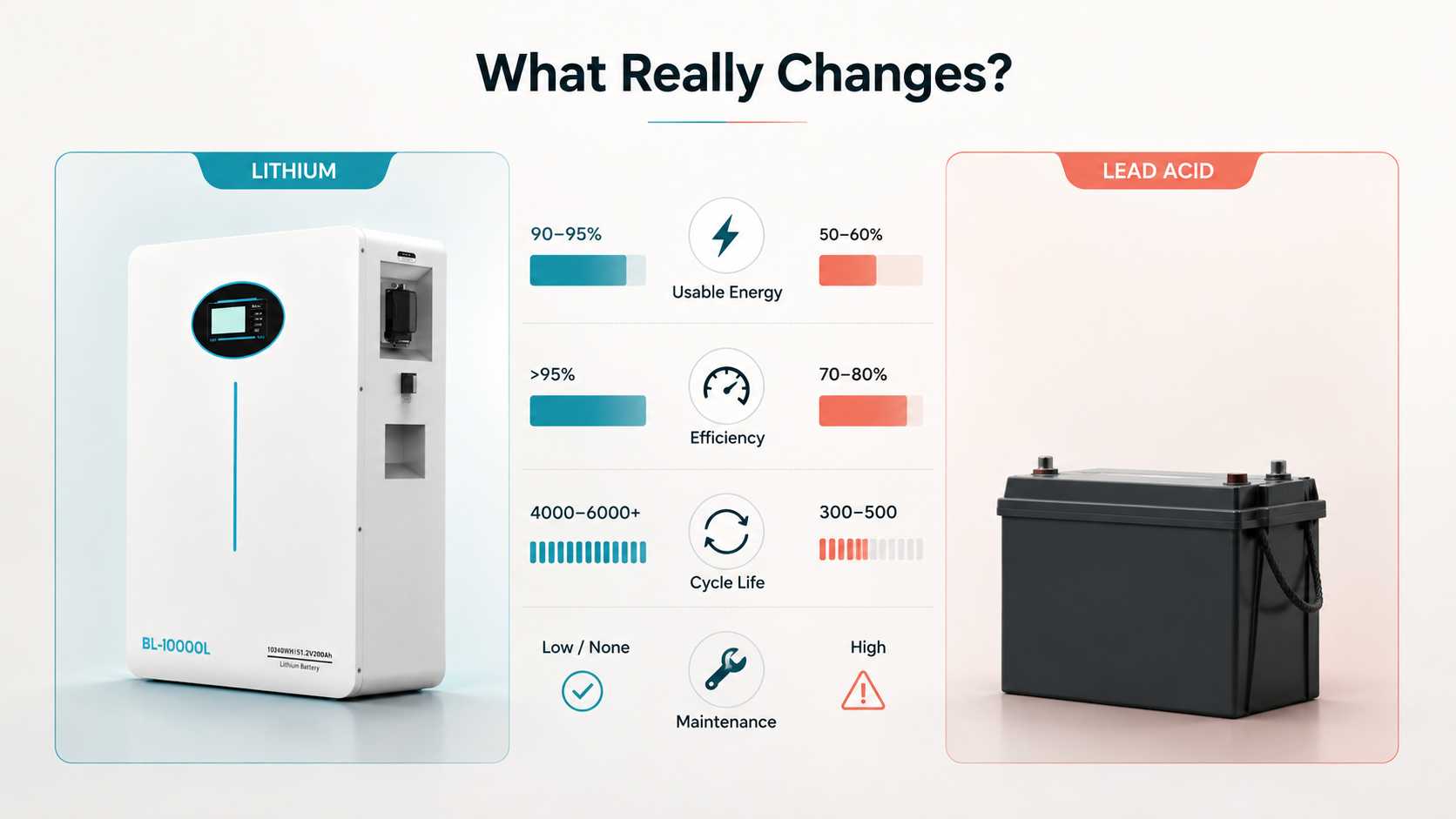
A practical cost model should include initial battery cost, usable capacity, expected cycles, inverter compatibility work, protection devices, installation labor, monitoring, maintenance, and future replacement. If the buyer only compares first cost, lead acid often looks better. If the buyer compares lifetime delivered energy, lithium often becomes stronger.
Cost factor | Lead acid battery | Lithium iron phosphate battery | Buyer impact |
First price | Lower | Higher | Lead acid helps tight budgets |
Usable capacity | Lower in practical design | Higher with correct settings | Lithium can reduce oversizing |
Maintenance | Higher | Lower | Lithium can reduce service visits |
Space and weight | Higher | Lower | Lithium fits cleaner battery rooms |
System visibility | Limited unless added | BMS data can help | Lithium supports better monitoring |
Replacement risk | Higher under frequent cycling | Lower when sized correctly | Lifetime cost may favor lithium |
Practical check: estimate the cost of one failed outage before selecting the battery. A shop that loses refrigerated goods or card payments may justify lithium faster than a home that only needs lights during rare outages.
Field Sizing Example for a Small Shop
Consider a small shop that wants backup for one freezer, two LED lighting circuits, a router, a payment terminal, and a security camera system. The owner may ask for eight hours of backup, but the better first step is to list each load, its running wattage, its starting behavior, and whether it must stay online during every outage.
If the critical load averages 900 W for four hours, the site needs at least 3.6 kWh of delivered AC energy before inverter loss and battery reserve. A lead acid design may need a larger nominal bank to avoid deep discharge stress. A lithium iron phosphate design can often meet the same delivered energy target with a cleaner usable capacity plan, provided inverter settings and BMS communication are correct.
This makes lithium vs lead acid batteries a financial decision. The buyer is not buying a battery box. The buyer is buying avoided spoilage, payment uptime, security continuity, and fewer service visits. If those loads have clear business value, lithium can be easier to justify even when first price is higher.
Backup planning item | What to check | Why it changes battery choice |
Critical load list | Freezer router payment terminal lights and security | Prevents oversizing the whole building |
Starting current | Motors compressors and pumps | Protects inverter and battery from overload |
Required backup time | Real outage pattern and business risk | Sets usable kWh target |
Battery reserve | Minimum allowed state of charge | Protects service life and emergency margin |
Maintenance access | Ventilation inspection and service skill | Affects lead acid operating burden |
When Lead Acid Batteries Still Make Sense
Lead acid can still fit standby systems with low use, strict first cost limits, and existing equipment already designed around lead acid charging. A small backup system for rare outages may not need the higher CAPEX of lithium.
Lead acid can also be acceptable when the buyer has trained staff, ventilation, safe access, and a replacement plan. The risk is using lead acid in a high cycle solar storage job and expecting lithium level performance.
SNADI/SNAT Solar BL Lithium Iron Phosphate Battery
Our BL Lithium Iron Phosphate Battery fits buyers who need lithium storage for solar backup, inverter communication, and expandable battery capacity. The official lithium battery page positions BL for wall mounted and rack mounted use, modular capacity expansion, and RS485 communication with SNADI hybrid inverters.
From an engineering view, BL belongs in projects where usable energy, battery monitoring, and lower maintenance matter. It can support home backup, small offices, security systems, routers, and selected commercial loads when the inverter and protection settings are reviewed.
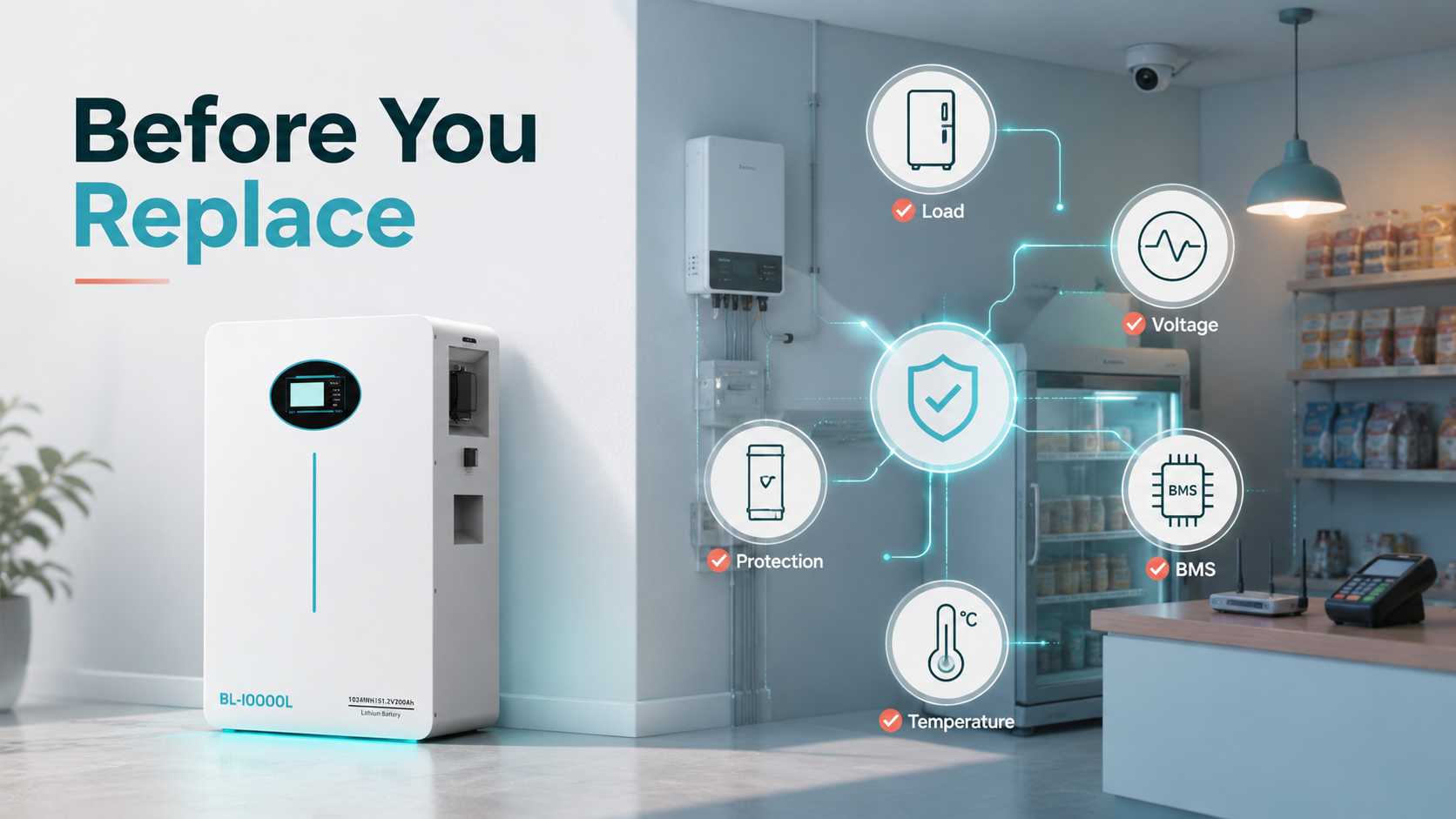
We do not treat lithium as a magic replacement for every lead acid bank. The buyer still needs correct voltage, charge profile, cable sizing, fuses, temperature review, and BMS communication checks.
Compatibility Checklist Before Replacing Lead Acid
Before replacement, check inverter charge voltage, maximum current, battery voltage range, low voltage cutoff, communication protocol, cable size, fuse rating, ambient temperature, cabinet space, and whether old lead acid batteries will be fully removed.
Do not mix lithium and lead acid in one bank. Do not assume an old charger supports lithium. Do not quote backup hours without real load data. Buyers should check those items before choosing a system.
Conclusion
Lithium vs lead acid batteries is not a simple winner question. Lead acid can still work for low cost standby use with light cycling. Lithium iron phosphate is usually stronger for daily solar self use, small commercial backup, limited space, and projects where monitoring and maintenance savings matter. For Chilean buyers planning solar backup or storage upgrades, SNADI/SNAT Solar BL Lithium Iron Phosphate Battery is relevant when inverter settings, BMS communication, protection, temperature, and load planning are checked together.
✉️Email: marketing@snadi.com.cn
Website:
☎️WhatsApp / WeChat: +86 1803929353

FAQ
Lithium is usually better for daily cycling, limited space, monitoring, and lower maintenance. Lead acid can still fit low budget standby systems that cycle rarely and already have compatible charging equipment.
Why does usable kWh matter more than battery nameplate rating?
Can I replace lead acid batteries with lithium directly?
When does lead acid still make sense?
How does SNADI/SNAT Solar BL battery fit solar backup projects?
Should lithium and lead acid batteries be mixed in one bank?